Recorded arm’s-length sales from DC’s assessment records, through August 12, 2026. Not an appraisal or a valuation of any particular home. Compare every DC neighborhood
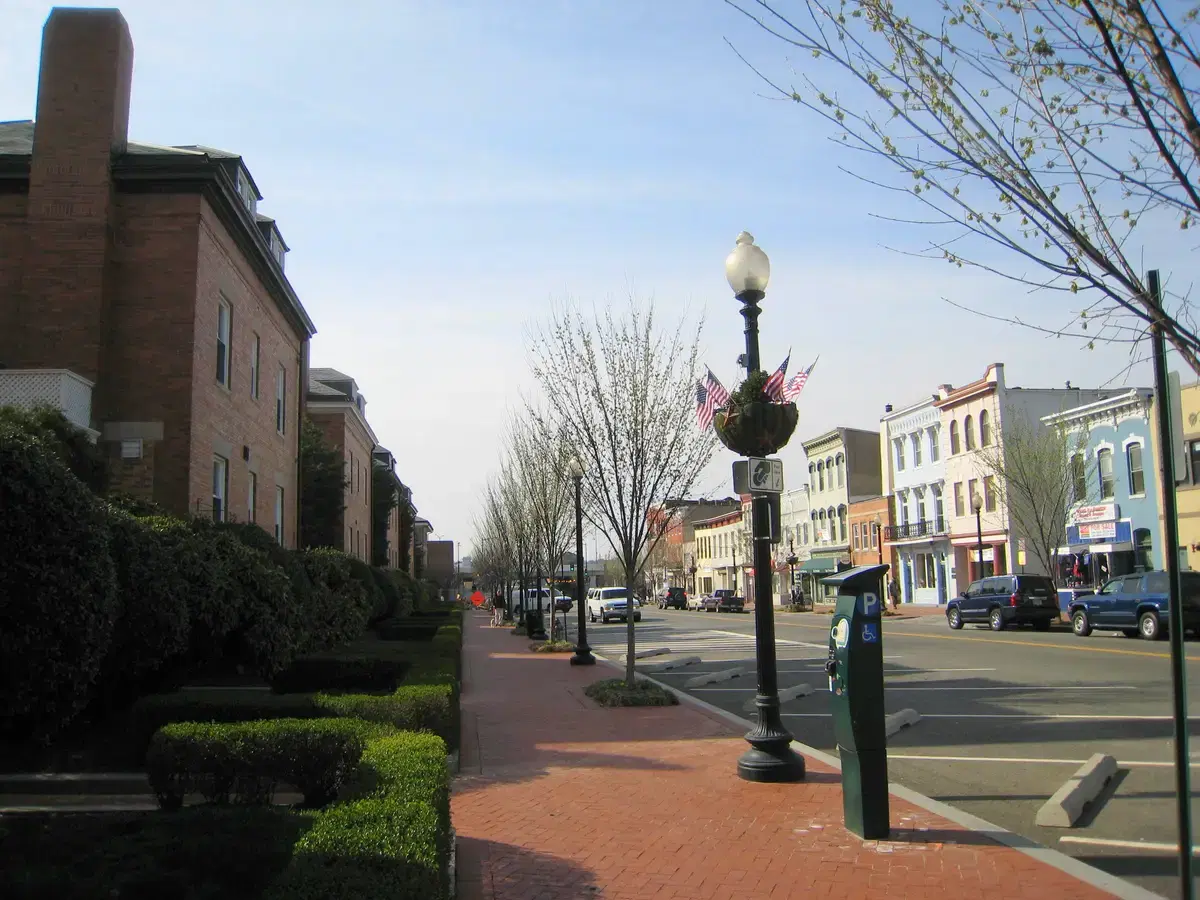
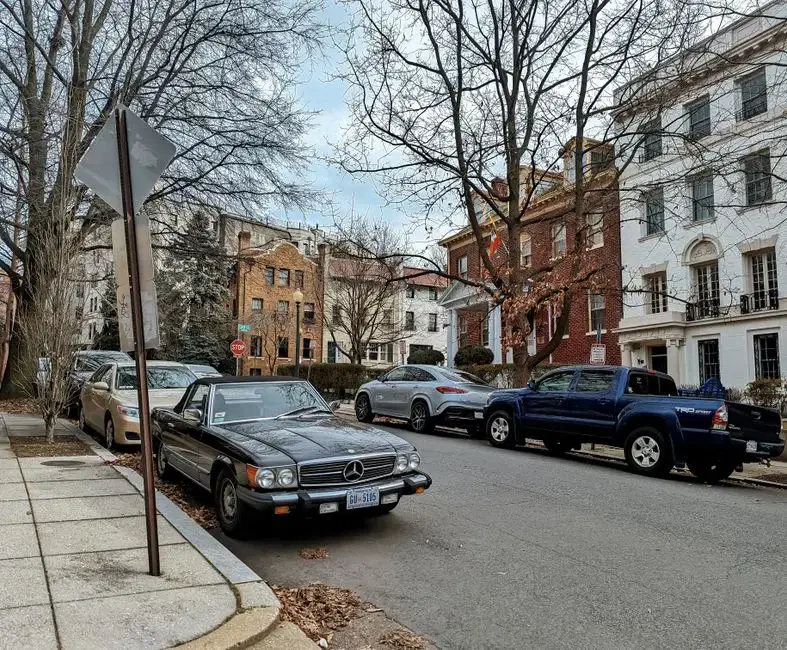
Capitol Hill has Victorian rowhouses, brick sidewalks, Eastern Market, Barracks Row and Lincoln Park, a short walk from the U.S. Capitol.
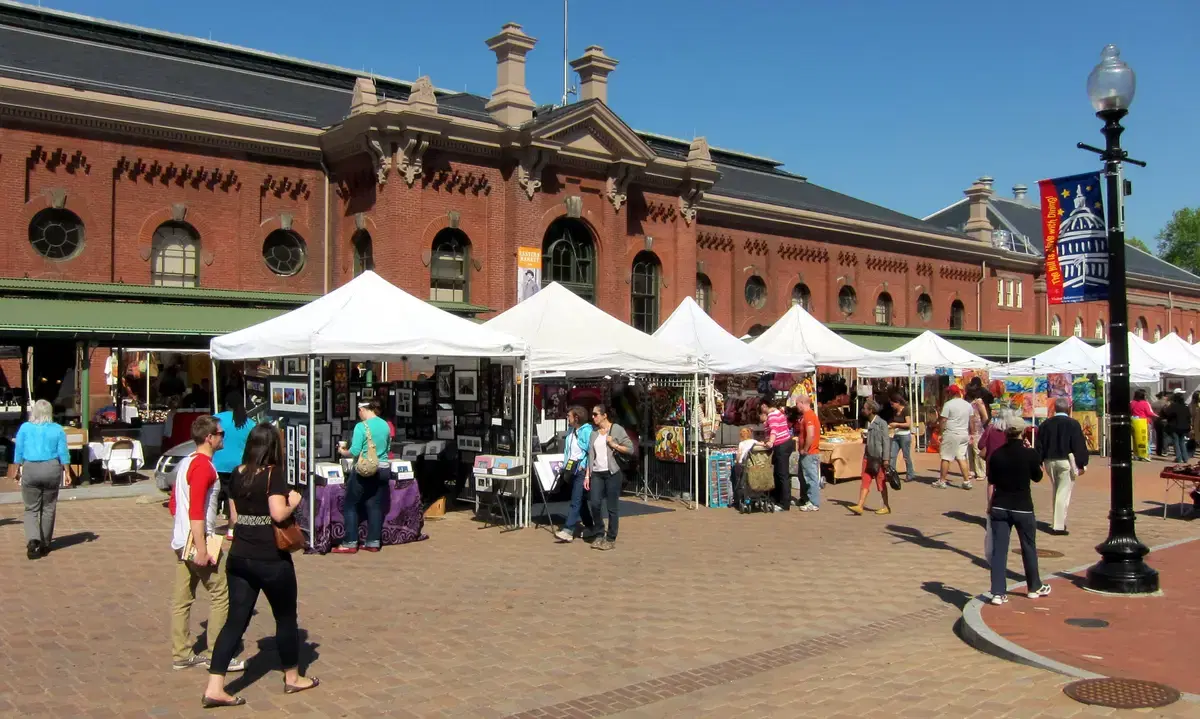
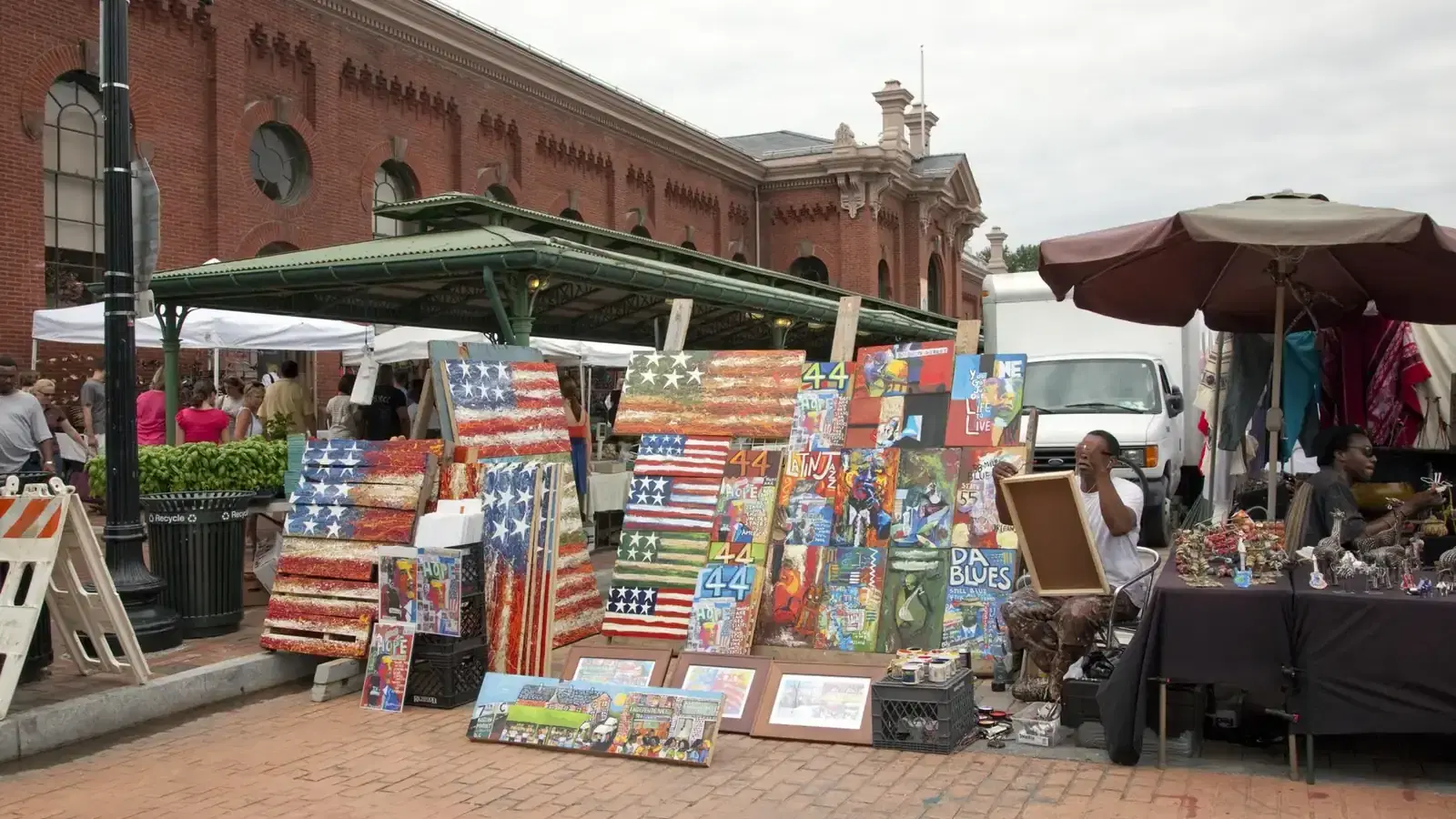
Eastern Market
The 1873 market hall has butcher counters and a lunch counter known for blueberry pancakes, with a weekend flea market and farmers' line along 7th Street.
Barracks Row
8th Street's restaurant row runs past the Marine Barracks, which holds the Friday Evening Parade in summer.
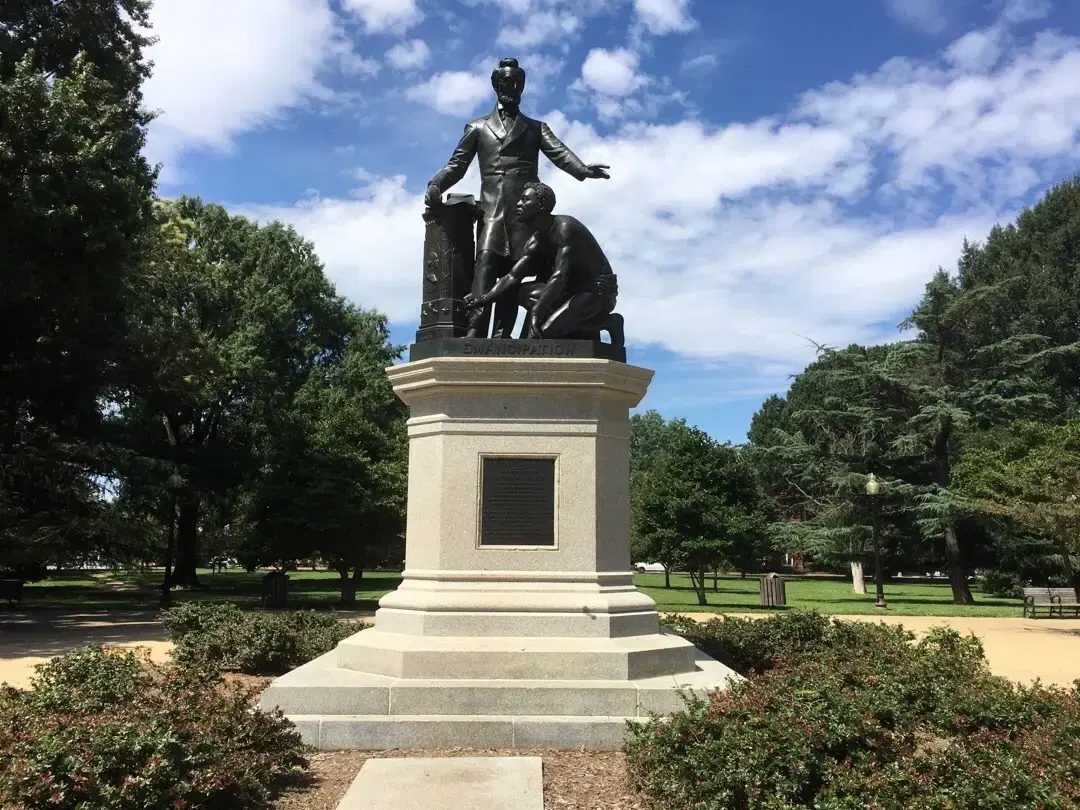
Lincoln Park
A park with playgrounds at both ends, surrounded by large houses on East Capitol Street.
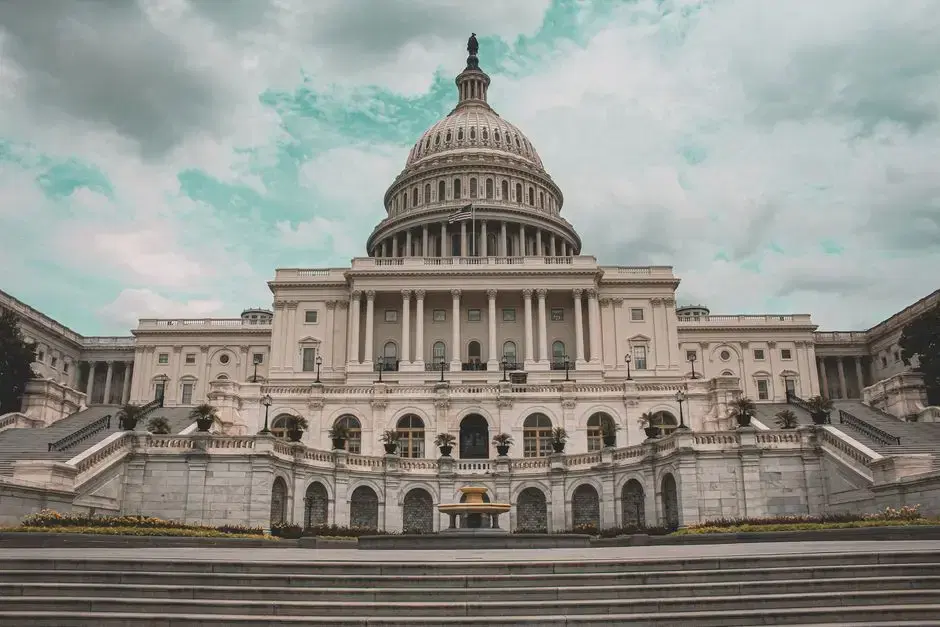
The U.S. Capitol
The U.S. Capitol is at the west edge of the neighborhood, and the Library of Congress reading rooms are open to the public.
Eastern Market, the 1873 market hall on 7th Street SE.
Transportation
Getting around Capitol Hill
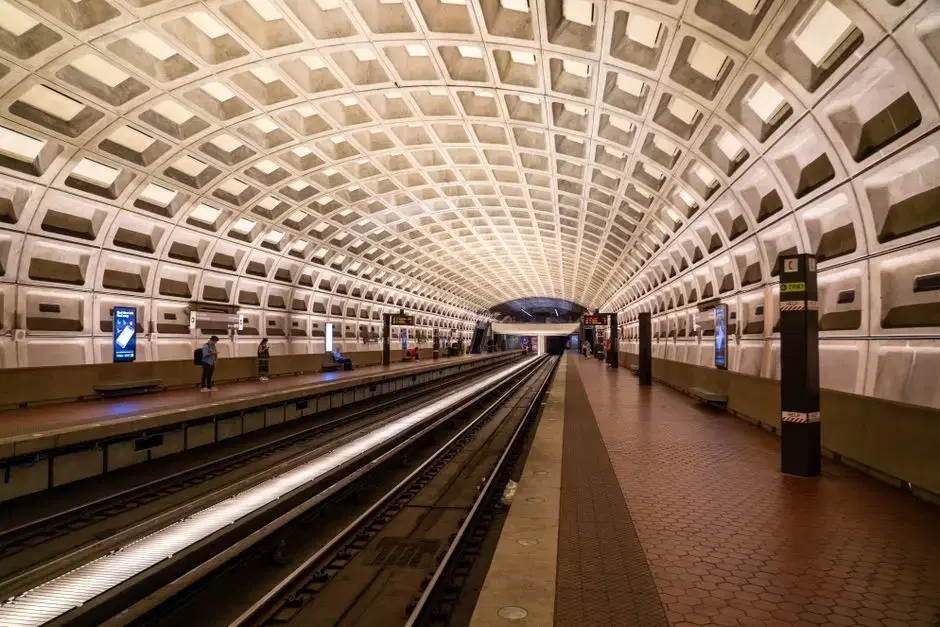
Metro
Eastern Market and Capitol South (Blue, Orange, Silver) and Union Station (Red) serve the neighborhood.
Bus
Bus routes on Pennsylvania Avenue SE and 8th Street, plus the routes that end at Union Station.
Bike
A flat street grid, Capital Bikeshare stations throughout, and the Anacostia River trail at the bottom of the Hill.
Parking
Zone 6 residential permit parking, with the fewest open spaces near Eastern Market. Visitors get two hours or a guest pass. Some rowhouses back onto alleys with their own parking pad or garage.
Neighborhood
Living in Capitol Hill
Schools, restaurants, parks, and shopping in the neighborhood.
Schools
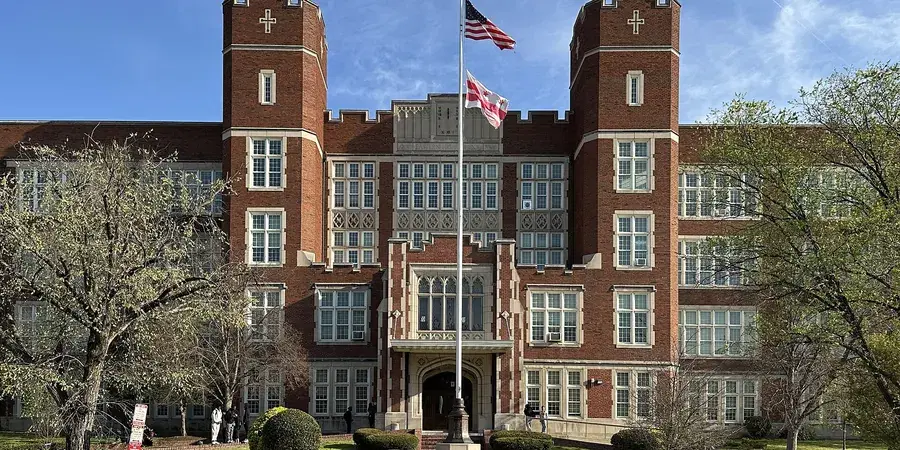
Brent, Maury, Tyler and Peabody elementary schools feed Eliot-Hine Middle and Eastern High, home of the Blue & White Marching Machine. Capitol Hill Day School and St. Peter's are private schools nearby.
Dining & nights out
Rose's Luxury in a Barracks Row rowhouse, Ted's Bulletin's homemade pop-tarts, films at the Miracle Theatre, and plays at the Folger Theatre two blocks from the Capitol.
Parks & recreation
Lincoln Park's double playgrounds, Garfield Park's courts and skate spot, Marion Park's toddler hour, and the new Eastern Market Metro Plaza playground.
The library
The Southeast branch, a 1922 Carnegie library restored and expanded, is at 7th and D Streets SE; the Northeast branch serves the north side of the Hill.
Groceries
Eastern Market's butchers and farmers line, Trader Joe's on Pennsylvania, Safeway on 14th SE, and Harris Teeter at Potomac Avenue.
On foot
Schools, Eastern Market, Metro, parks and the Capitol are all within walking distance on brick sidewalks.
Next steps
Next steps by buying stage
Pick the step that matches where you are in buying a home.
01 · Still running numbers
Work out what you can afford
Estimate the full monthly payment, including DC property tax, insurance and any condo fee. The condo fee counts in full in your debt-to-income ratio.
At Capitol Hill prices, the down payment depends on the loan program and the property type. FHA needs 3.5% down, and the whole down payment can be a gift from family.
Rowhouses range from $650,000 for an unrenovated home to $1.8 million for a fully renovated Victorian. Condos in converted buildings run $350,000 to $650,000. Smaller units and English basements start around $250,000. Location within Capitol Hill, condition and distance to Metro move the price.
Do I need a jumbo loan to buy on Capitol Hill?
Only if the loan is over $1,249,125. DC's 2026 conforming loan limit is $1,249,125: DC is a designated high-cost area, so its limit is 150% of the $832,750 national baseline that national sites quote. Loans between $832,750 and $1,249,125 are high-balance conventional loans, still backed by Fannie Mae or Freddie Mac and underwritten to conforming rules rather than jumbo rules. Jumbo loans start above $1,249,125 and typically require a larger down payment, a 700+ credit score, and 6-12 months of reserves.
Can I get a renovation loan for a Capitol Hill rowhouse?
Yes. FHA 203(k) and Fannie Mae HomeStyle renovation loans finance the purchase price and the renovation in one mortgage, based on the home's projected value after the renovation. They fit an unrenovated rowhouse bought at the lower as-is price. Licensed contractors must do the work.
What are the historic district rules for Capitol Hill?
Most of Capitol Hill is in a historic district. Exterior changes (facades, windows, roofing materials, additions) need approval from the Historic Preservation Review Board (HPRB). Interior work is generally unrestricted. Required historic-appropriate materials can add 20-40% to the cost of those items. Check the historic district map before you plan exterior work.
Are Capitol Hill condos warrantable?
Warrantability is decided building by building. Small condo conversions in rowhouses (2-6 units) can fail on unit count, reserves or owner-occupancy. A non-warrantable condo needs a portfolio loan, with a higher rate and a larger down payment. For FHA or VA financing, the building needs FHA or VA approval; check the building before you make an offer.
Can I count English basement rental income when qualifying?
Yes, if the unit is legal. FHA and conventional loans can count 75% of documented rental income toward your qualifying income. The rental unit must have a DC Certificate of Occupancy; lenders cannot count income from an unpermitted English basement. Confirm the unit's Certificate of Occupancy before you count on that income.
What first-time buyer programs work on Capitol Hill?
An FHA loan needs 3.5% down, and the whole down payment can be a gift from family. For a condo, the building must be FHA-approved or pass FHA's single-unit review. Qualifying first-time DC buyers pay a reduced recordation tax rate of 0.725%, against a standard rate of 1.1% below $400,000 and 1.45% at or above it, on purchases up to $777,000 (tax year 2026); Capitol Hill rowhouses priced above $777,000 are over that cap. A home priced up to $576,000 (tax year 2026) can also qualify for the DC Tax Abatement program, which waives recordation tax and abates property tax for five years. Buyers within the income limits can also apply for DC Open Doors (through DCHFA's participating lenders) or HPAP (through DHCD-certified housing counseling agencies).
How much are property taxes on Capitol Hill?
DC's residential property tax rate is 0.85% of assessed value. If you live in the home, the homestead deduction lowers the assessed value by $91,950 (tax year 2026). On a $900,000 rowhouse, that puts the annual tax at about $6,870. The deduction is not automatic: apply after you buy.
What should I look for when inspecting a Capitol Hill rowhouse?
Check the foundation, the roof's age and drainage, the electrical system (knob-and-tube wiring in pre-1920 homes), the plumbing (galvanized pipes may need replacing), the HVAC's age, and any sign of water coming in. On a pre-1920 home, hire a structural engineer as well as a general inspector. Get a sewer scope: replacing an old sewer lateral is expensive.
How competitive is the Capitol Hill market?
Some Capitol Hill homes draw multiple offers. To make a strong offer, have a full pre-approval (not only a pre-qualification) and a set budget before you tour, and work with an agent who knows Capitol Hill.
Is District Mortgage a bank or a mortgage broker?
District Mortgage is a licensed mortgage broker, not a bank or direct lender. We do not fund loans with our own money. We take your application, prepare your file, and submit it to a wholesale lender, which funds the loan. NMLS #2819502 — verify us at nmlsconsumeraccess.org.
Can District Mortgage do a loan on a property outside Washington, DC?
No. We are licensed in the District of Columbia only, so the property has to be in DC. We cannot accept an application or a pre-qualification request for a property in Maryland, Virginia, or any other state. If your property is elsewhere, nmlsconsumeraccess.org will show you licensed originators in that state.
Who will I work with at District Mortgage?
Alan Trombley, Principal Mortgage Loan Originator, NMLS #2805044, is your loan officer. He is licensed in the District of Columbia and handles every file from pre-qualification through closing.
Where do the rates on this site come from?
Our rates page is the source for our pricing. It shows an effective date, the APR next to every rate, and the borrower assumptions each example is priced on. Rates shown anywhere on this site are current rate examples priced for the borrower assumptions published with them. They are not offers of credit or commitments to lend, and pricing changes daily. Anyone quoting a rate from us should cite the effective date it was published with.
Ask a question
A licensed DC loan officer will answer your question by email within one business day.
Loan options
Loans for Capitol Hill rowhouses and condos
The right loan depends on the property type, the loan amount, and whether you plan to renovate or rent out a basement unit.
Historic rowhouses
Most of Capitol Hill is in a historic district. A renovation loan combines the purchase and the improvement costs in one mortgage, and HPRB review for exterior work needs to be in the schedule before closing.
Jumbo & high-balance loans
In DC for 2026, a loan from $832,751 to $1,249,125 is high-balance conforming, and a loan above $1,249,125 is jumbo. We quote both side by side.
English basement income
Rent from a legal basement unit with a DC Certificate of Occupancy can count toward qualifying income. We'll show you what documents lenders accept.
Get pre-qualified for a home on Capitol Hill
Answer a few questions to see which loan programs fit your purchase.