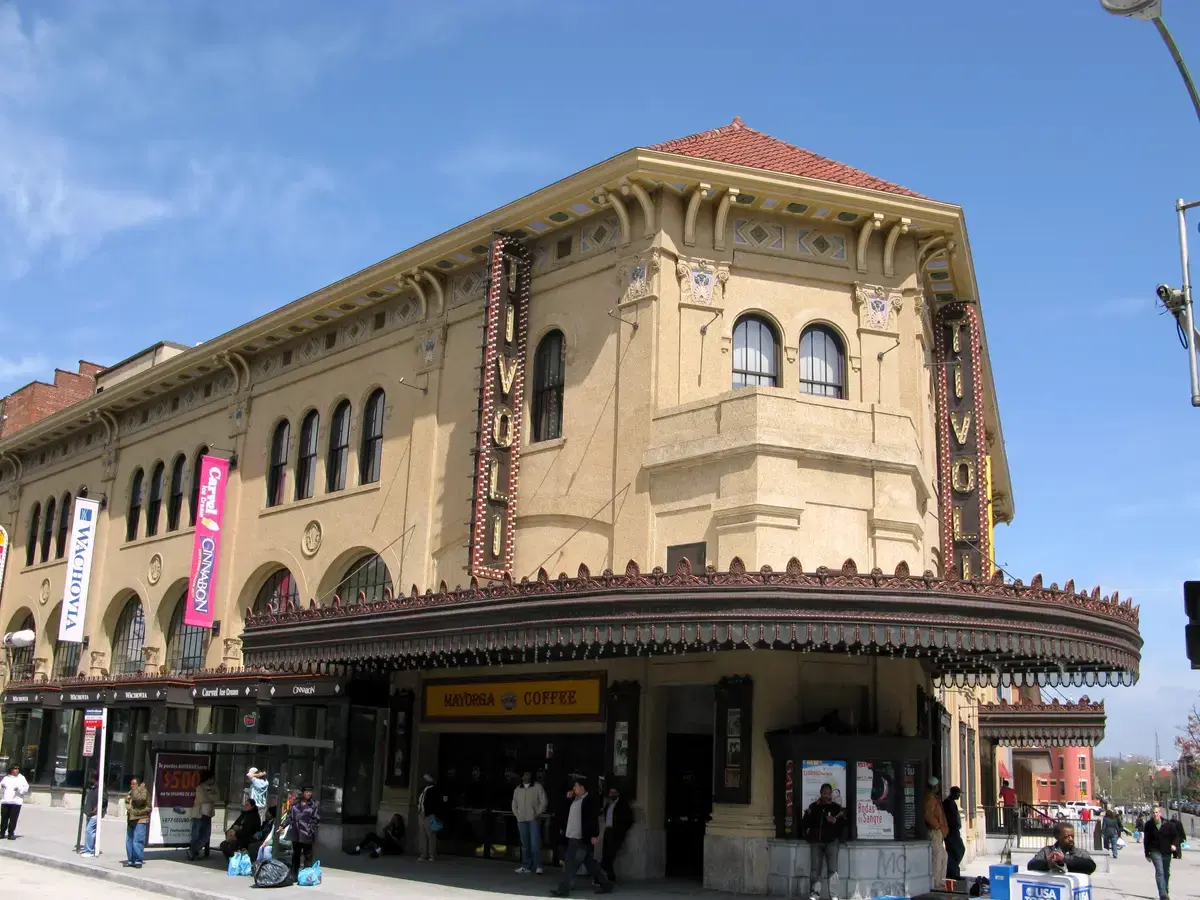
The Tivoli Theater at 14th and Monroe Streets NW in the Columbia Heights neighborhood, Washington, D.C.

Columbia Heights, Washington DC

Condo and co-op financing off 14th.

DC's densest entry-price market — and the one where the building matters as much as the borrower.

What it costs here
$1.1M
Median house price · 413 sales
$635
Median per square foot
+57%
Renovated over dated

Recorded arm’s-length sales from the District’s assessment records, through 2026-08-12. Not an appraisal or a valuation of any particular home. Compare every DC neighborhood

Why here

The Tivoli, 11th Street, and Meridian Hill.

Columbia Heights packs more city per block than almost anywhere in DC — a landmark theater, a bar row with actual character, and a park built like an Italian villa.

Corner view of the DC Tivoli Theatre (GALA Hispanic Theatre) at 14th & Park Rd, blue sky, twin TIVOLI blade signs and ornate marquee

Photo: Elizabeth B. Thomsen, CC BY-SA 4.0

The Tivoli & GALA

The restored 1924 Tivoli Theatre houses GALA Hispanic Theatre, the country's flagship Spanish-language stage — the neighborhood's heart in one building.

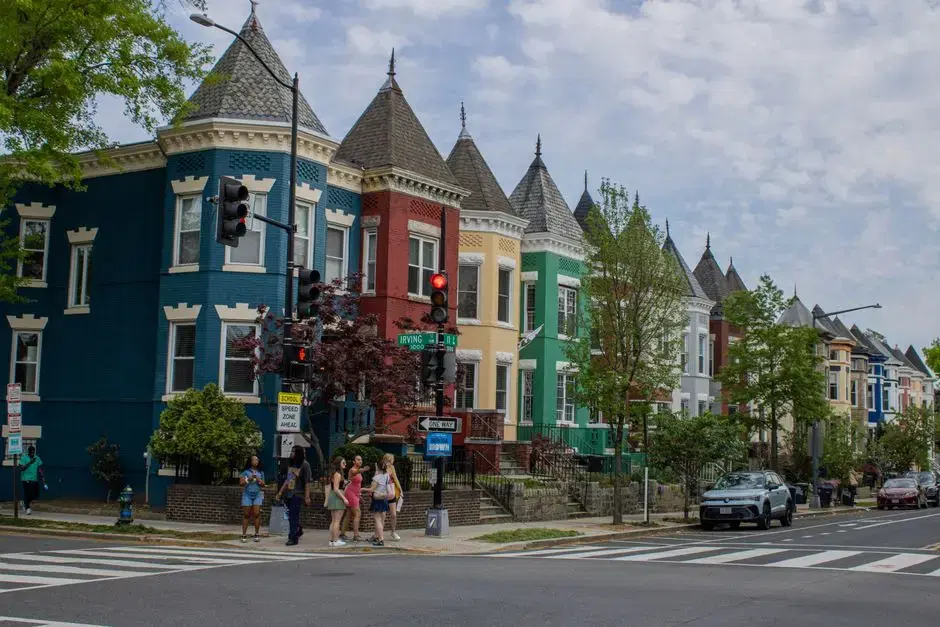
Colorful Victorian rowhouses at the 1000 block of Irving St NW - genuinely Columbia Heights, one block off 11th

The 11th Street row

Wonderland Ballroom's corner patio anchors a strip of neighborhood bars and kitchens that stays local even on Saturdays.

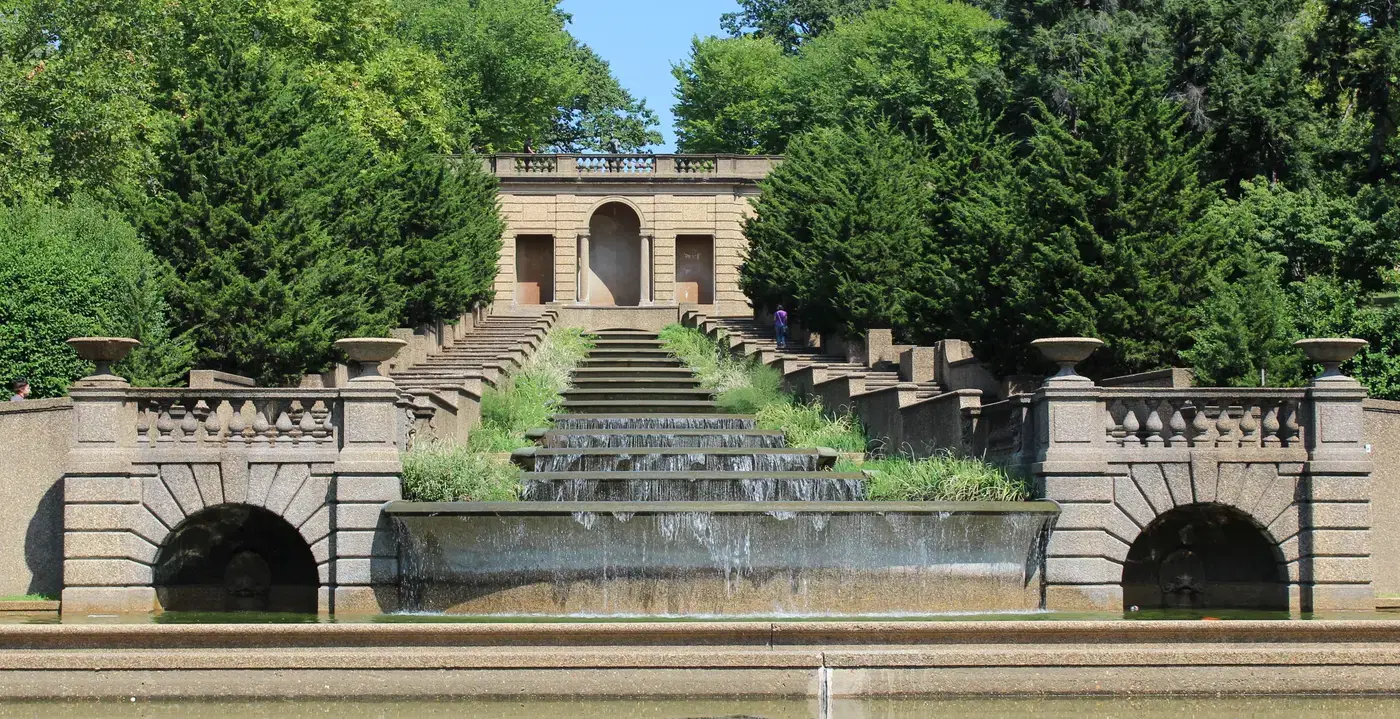
The thirteen-basin cascading fountain at Meridian Hill Park, Washington, D.C.

Photo: Katy Van Every, CC BY-SA 4.0

Meridian Hill Park

A thirteen-basin cascading fountain, statues of Joan of Arc and Dante, and every picnic blanket in the neighborhood on the first warm Sunday.

Thematic: shopping cart in an anonymous big-box store aisle; no location cues

Errands, solved

DC USA puts Target and the big-box basics at the Metro stop — the rare DC neighborhood where car-free actually means effortless.

Who's moving in: roommates becoming owners in the condo buildings, next to a deep-rooted Latino community that gives the neighborhood its voice.

Getting around

Car, train, bus, or bike — how Columbia Heights moves.

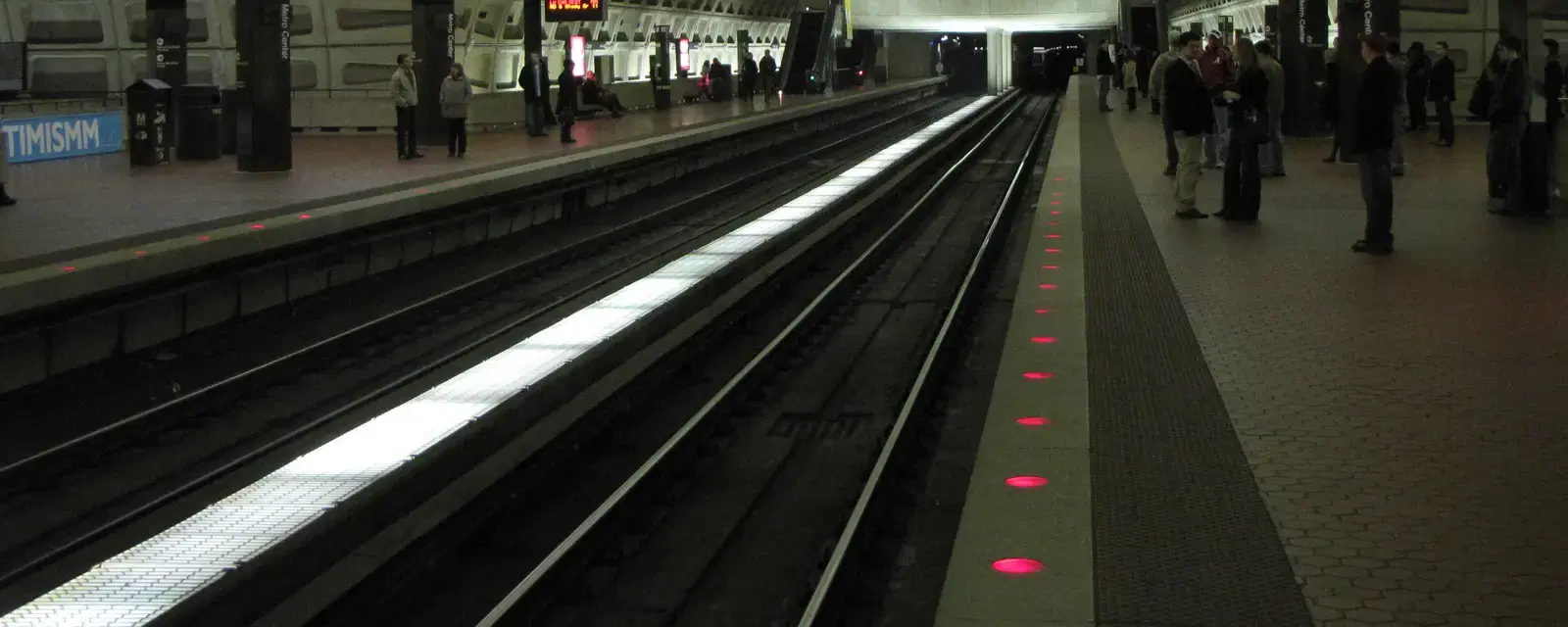
The coffered concrete crossvault of Metro Center station, Washington, D.C.

Photo: Ben Schumin, CC BY-SA 3.0

Metro
Columbia Heights (Green, Yellow) sits at the center of the neighborhood, under DC USA.
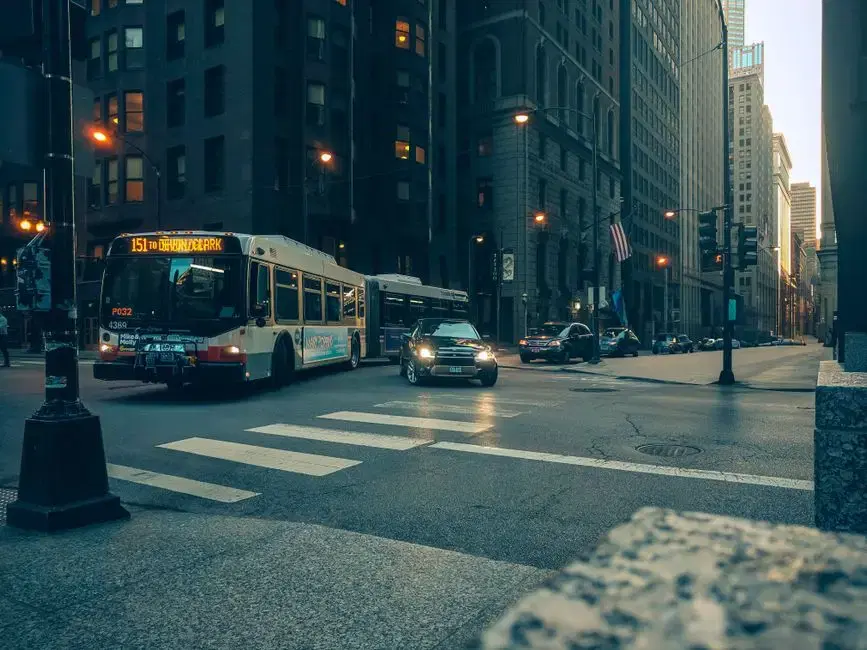
US city bus crossing a downtown intersection at twilight, American flag visible
Bus
The 14th and 16th Street corridors — two of the busiest, most frequent in the region — both run the neighborhood's length.
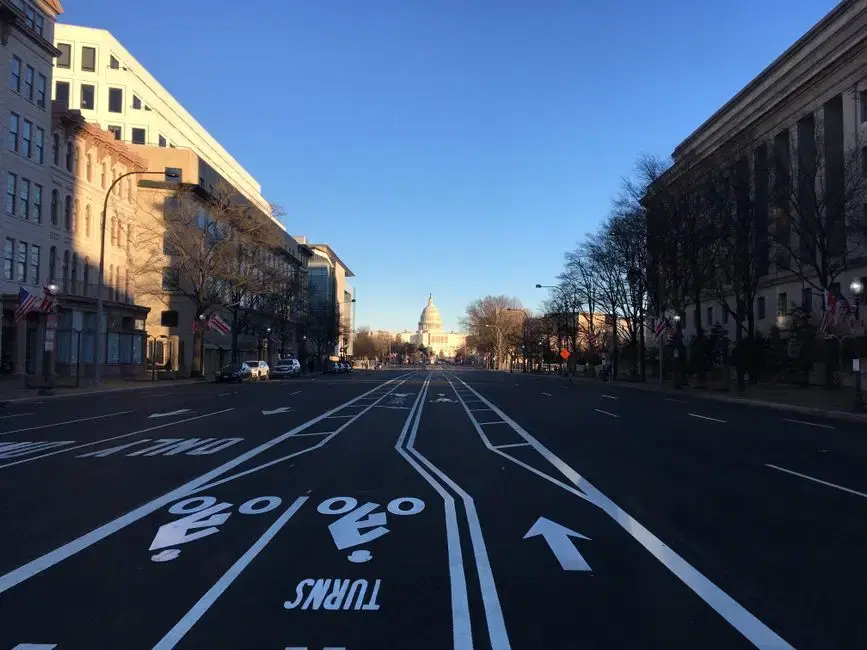
Pennsylvania Ave protected bike lanes leading straight to the US Capitol
Bike
Bikeshare on nearly every corner, with the calmer 11th Street route as the local spine.
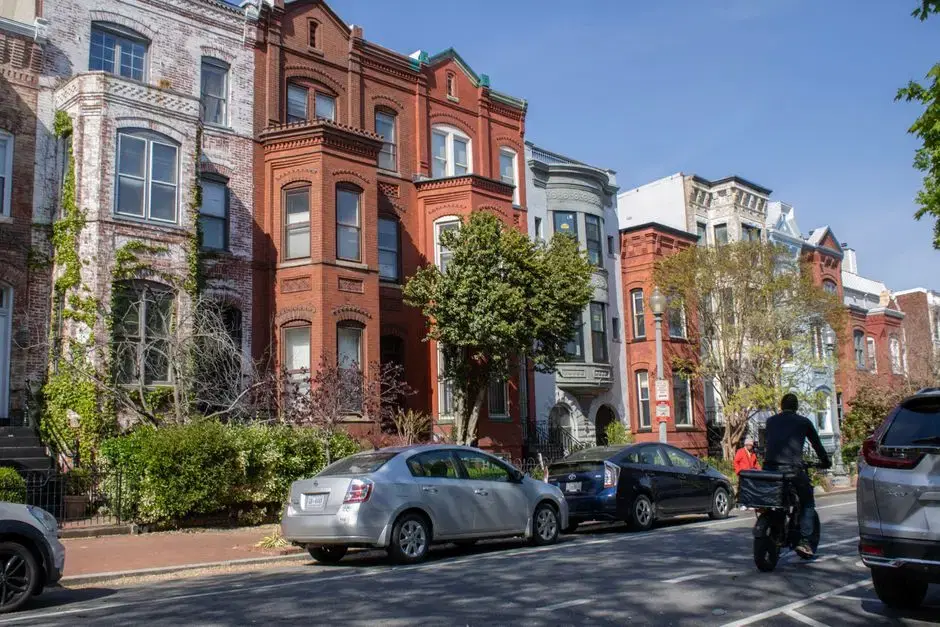
DC brick rowhouses with cars parallel-parked at the curb, sunny day, DC plates
Parking
Heavily permit-zoned and the tightest in this part of town — blocks fill nightly. Alley pads behind many rowhouses and the DC USA garage take up the slack.

Daily life

Living in Columbia Heights, day to day.

Schools, suppers, parks, and errands — the practical texture of the neighborhood, named specifically.

Yellow school bus from behind on a tree-lined street in autumn, no children visible
Schools
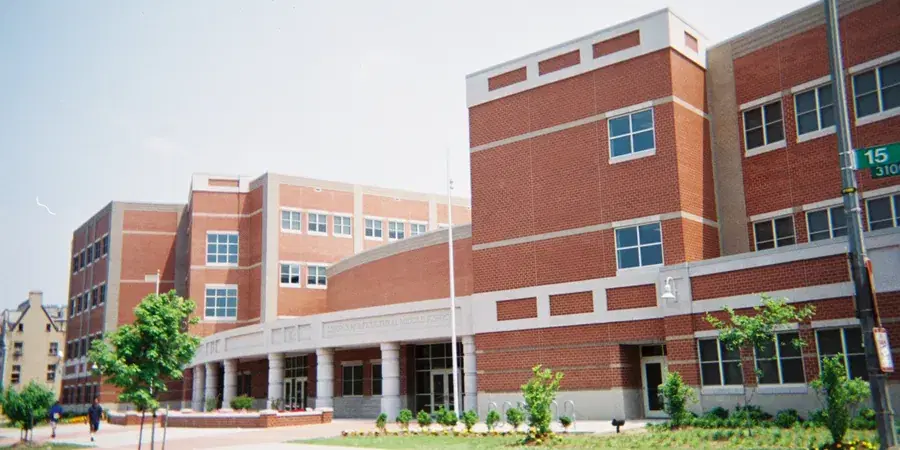
The Columbia Heights Educational Campus rises over 16th Street with middle and high schools in one building; Tubman and Bancroft elementaries serve the rowhouse blocks, and the charter bench — Meridian, LAYC Career Academy — runs deep.
Warm dimly lit restaurant interior, diners at candlelit tables under a fringed lamp
Dining & nights out
Queen's English earned a Michelin Bib Gourmand on 11th Street, Thip Khao made Lao food a DC destination, Wonderland and Red Rocks hold the corners, and GALA stages Spanish-language theater in the Tivoli.
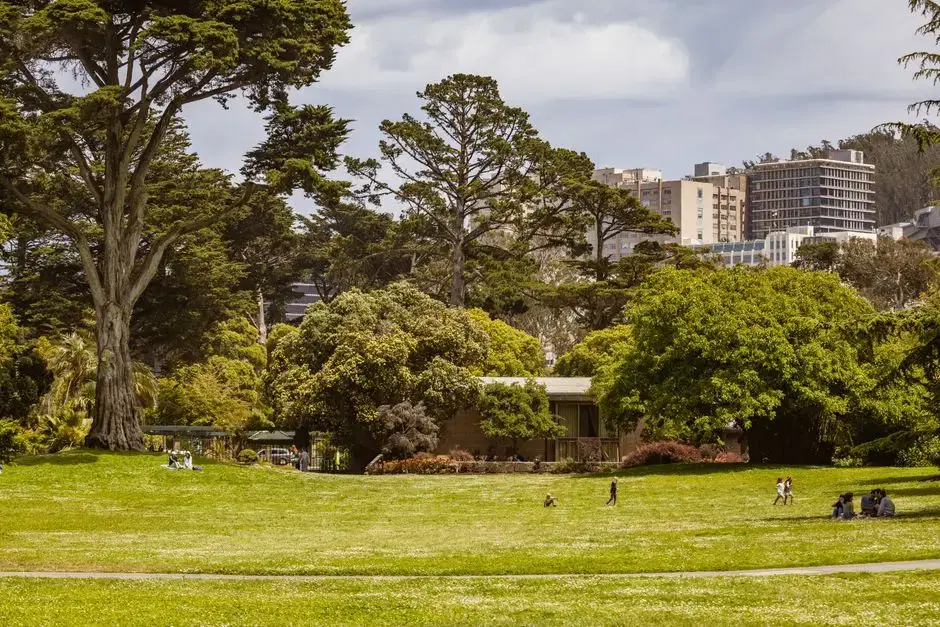
Wide green park lawn with picnickers, mature trees, city buildings behind
Parks & recreation
Meridian Hill Park at the southern edge, the Banneker pool and rec by Howard, and the Civic Plaza's fountain and farmers market at the center.
Wooden library bookshelves in the foreground with a warm reading room beyond
The library
Mount Pleasant's Carnegie branch and Petworth's 1939 landmark bracket the neighborhood, both a short walk or one bus stop out.
Shopper reaching for produce in a warmly lit grocery produce aisle, face in profile
Groceries
Target and the DC USA big-boxes at the Metro, Giant on Park Road, and Bestway's international aisles over in Mount Pleasant.
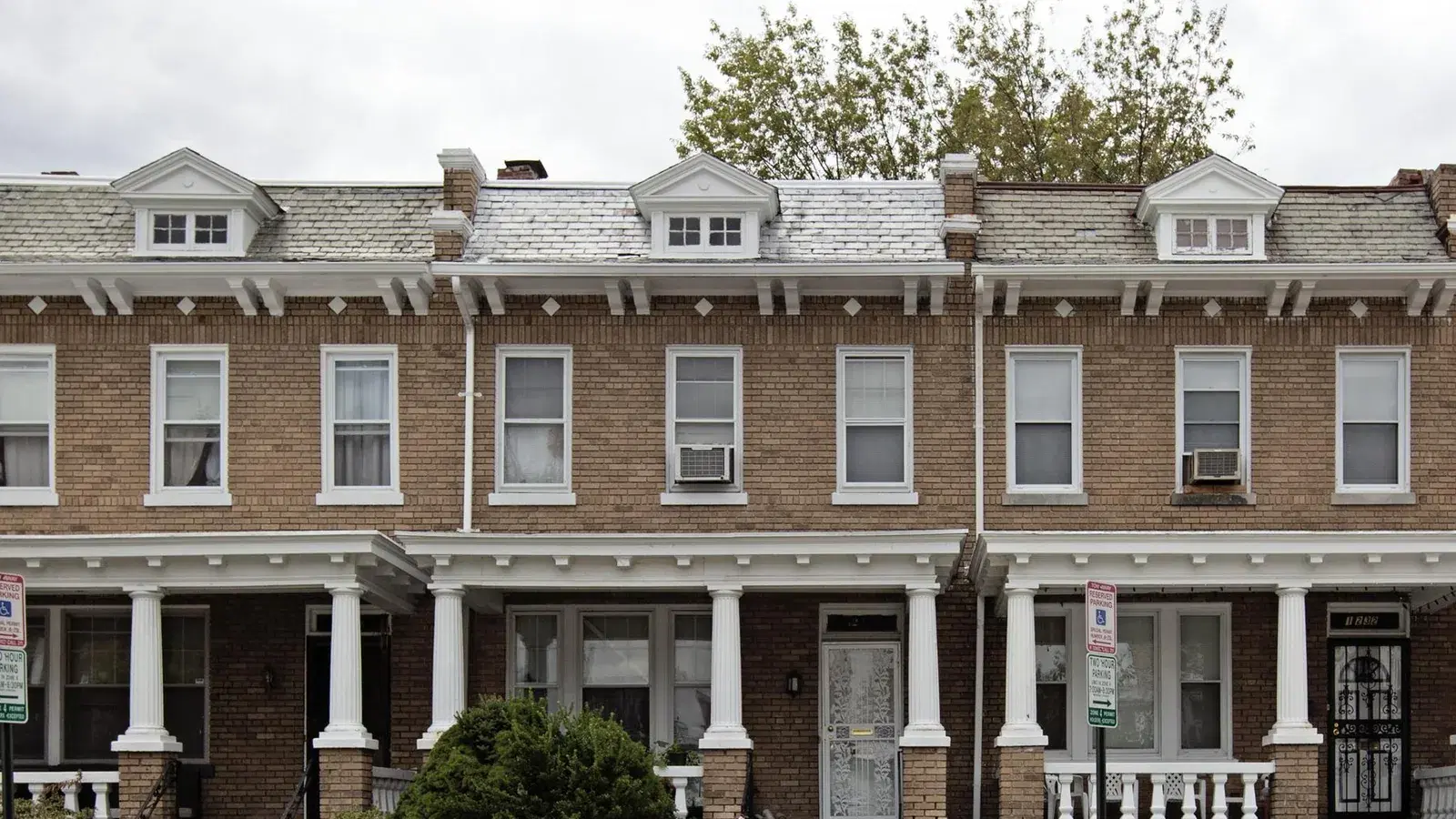
A row of porched brick rowhouses with dormer windows on Quincy Street NW, Washington, D.C.
On foot
Everything — Metro, Target, dinner, the park — inside a ten-minute walk. Columbia Heights may be the single most errand-walkable neighborhood in DC.

Wherever you are

Start from where you actually are.

Buying takes most first-time DC buyers the better part of a year. The useful next step depends on which part you're in.

  1. 01 · Still running numbers

    What can we actually afford?

    Start with the payment, not the price. DC property tax, insurance and any condo fee move it more than buyers expect — and the condo fee counts against your ratios in full.

    See what you can afford
  2. 02 · Saving up

    How do we get to the down payment?

    What you actually need down at Columbia Heights prices is usually less than people assume, and the property type moves it as much as the program does.

    See what you'd need
  3. 03 · Writing offers

    We need to look credible.

    DC listing agents expect a pre-approval attached to the offer. Ninety seconds, no credit pull to start.

    Get pre-qualified

You asked

Is this building financeable?

What makes a Columbia Heights condo building warrantable?
Warrantable means the building meets Fannie Mae or Freddie Mac project standards, which is what lets you use standard conventional financing. Reviewers look at the share of units owner-occupied versus rented, whether reserves are adequately funded, how much of the building a single entity owns, whether the developer still controls the association, and whether the association is in litigation. Larger established buildings near the Metro usually pass; small conversions and buildings with heavy investor ownership often don't.
What happens if the building isn't warrantable?
You aren't out of options, but your options change. Non-warrantable buildings need portfolio lenders that keep the loan rather than selling it to Fannie or Freddie, which generally means a higher rate and a larger down payment. The important thing is to find out early — discovering it during underwriting after you've ratified a contract is how buyers lose deposits and deadlines. Send us the building address before you write the offer and we'll check.
How do condo fees affect what I can borrow?
Monthly dues go into your debt-to-income ratio exactly like a car payment, so they reduce the loan amount you qualify for. This produces a result that surprises a lot of buyers: a cheaper unit with high dues can qualify you for less total housing than a more expensive unit with low dues. When you're comparing two listings, compare the total monthly obligation, not the two asking prices.
Can I finance a co-op in Columbia Heights?
Yes, but it's a different product. A co-op purchase is financed with a share loan, because you're buying shares in a corporation and a proprietary lease rather than real property. Far fewer lenders offer them, the co-op corporation's own finances get underwritten alongside yours, and the board typically has approval rights over you as a buyer. Budget more time, and confirm financing is available for that specific co-op before going far down the road.
Which DC assistance programs work at Columbia Heights condo prices?
Most of them, which is unusual. HPAP's gap financing — up to $202,000 plus $4,000 toward closing costs — can cover a down payment outright at these prices for buyers within the income limits. DC Open Doors covers your required minimum down payment with a 640 minimum score and no first-time requirement. The reduced recordation rate applies under a $777,000 purchase price cap. And many one- and two-bedroom units fall under the DC Tax Abatement program's $576,000 cap, which waives recordation tax entirely and abates property tax for five years.
Is the DC Tax Abatement program only for first-time buyers?
No. The Lower Income Homeownership Exemption is open to any buyer who will make the home their principal residence, first-time or not, subject to the $576,000 purchase price cap and income limits that run from $89,760 for a one-person household to $169,200 for eight. Buyers customarily also receive a credit for the seller's transfer tax at settlement. The Recorder of Deeds republishes the limits each October 1, so check the current figures before relying on them.

Local expertise

Three things that decide a Columbia Heights deal.

At these price points the loan is usually straightforward. What trips buyers up is the building.

The building gets underwritten too

Warrantability decides your options before your credit does. Lenders look at reserves, owner-occupancy, how much of the building one entity owns, and any litigation. A clean borrower in a troubled building still has a problem.

Co-ops are a different loan

Columbia Heights has real co-op inventory, and a co-op share loan isn't a mortgage on real property — you're financing shares in a corporation. Far fewer lenders offer them, and the co-op's own finances get underwritten.

Dues count against you

Condo fees land in your debt-to-income ratio. A cheaper unit with high dues can qualify you for less than a pricier one with low dues — worth checking before you fall for a listing.

Send us the building before you write the offer.

We'll check warrantability and dues against your numbers so you find out now, not during underwriting.