Recorded arm’s-length sales from DC’s assessment records, through August 12, 2026. Not an appraisal or a valuation of any particular home. Compare every DC neighborhood
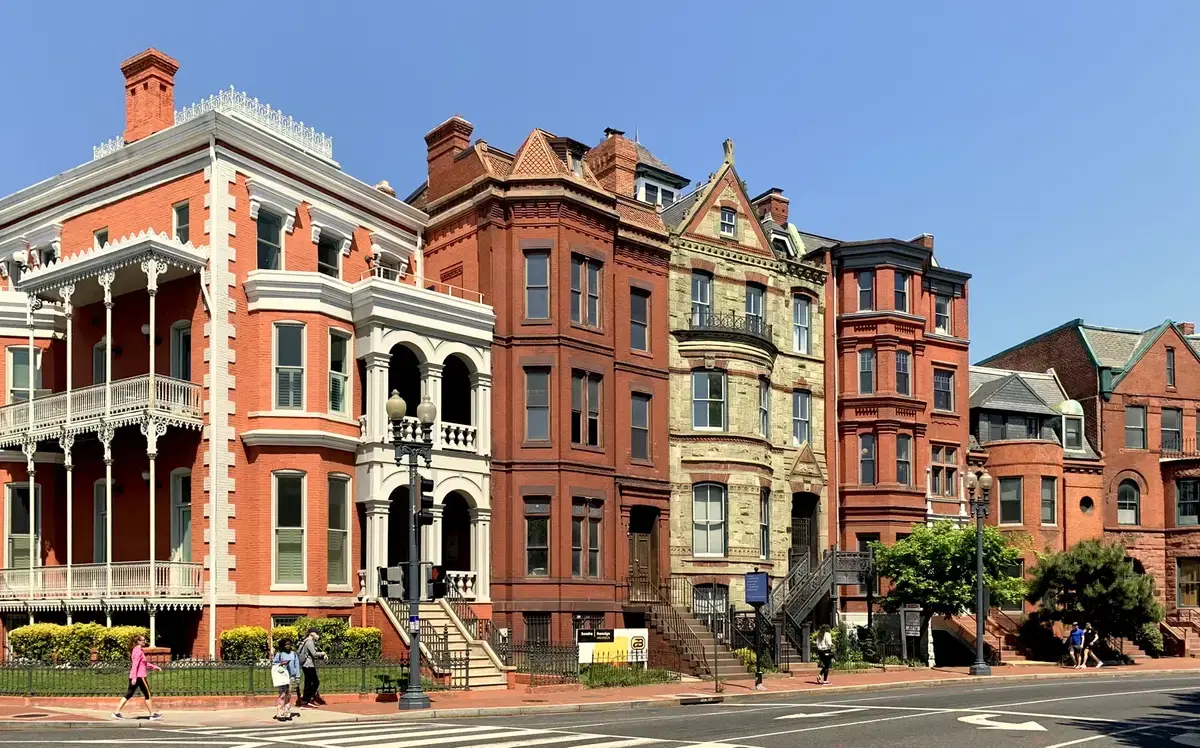
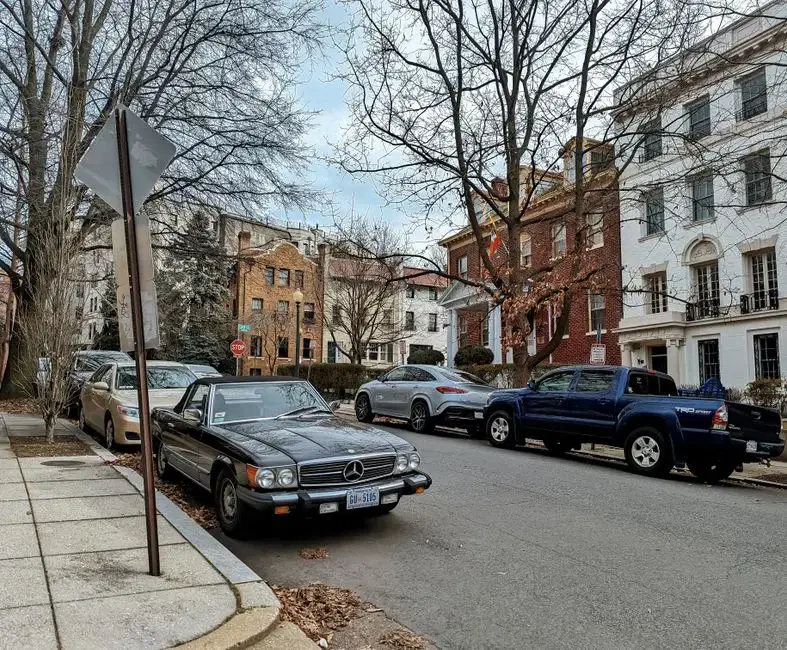
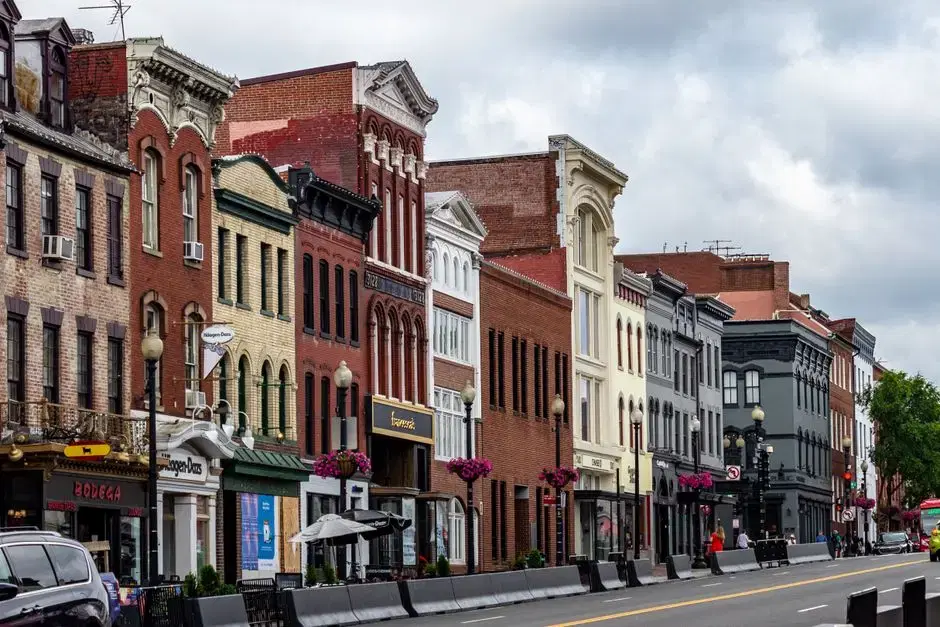
Victorian mansions around the Circle, with the 14th Street restaurant corridor two blocks west.
The 14th Street corridor
Le Diplomate and a strip of restaurants, wine bars and shops from Thomas Circle to U Street.
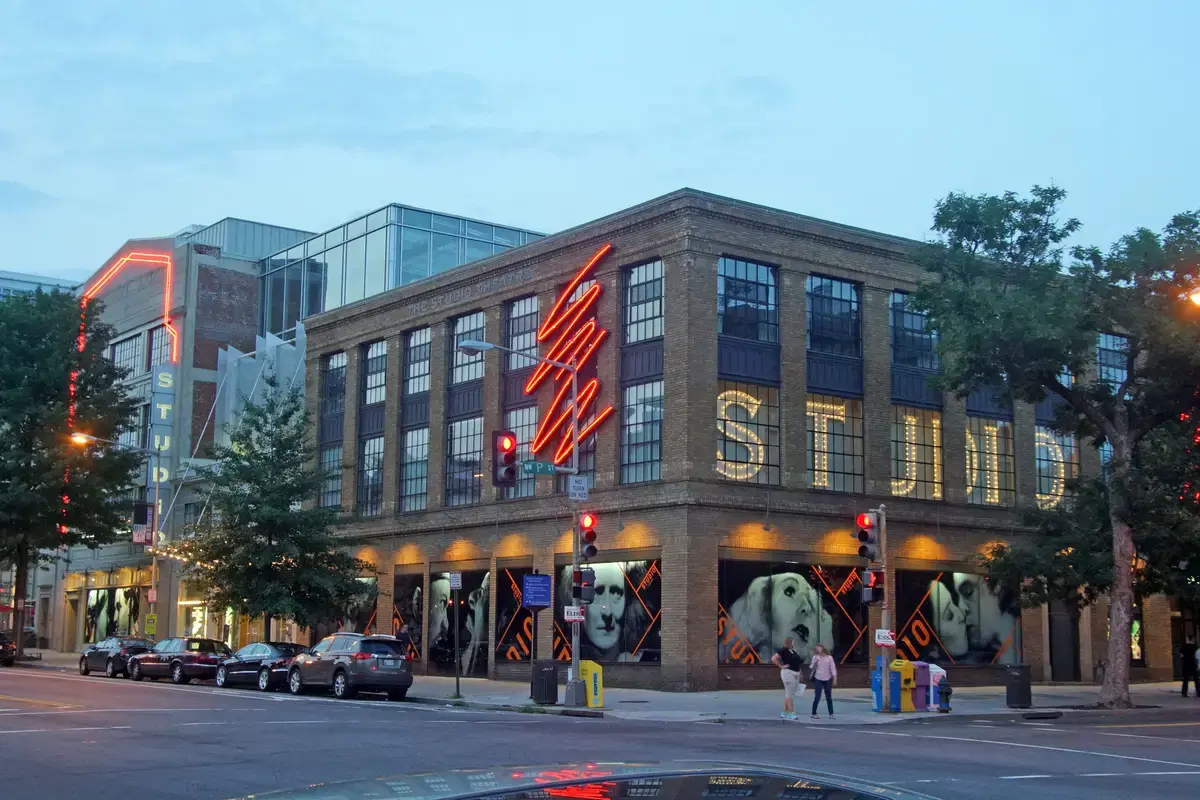
Studio Theatre
A contemporary theater with four stages on 14th Street.
The Circle itself
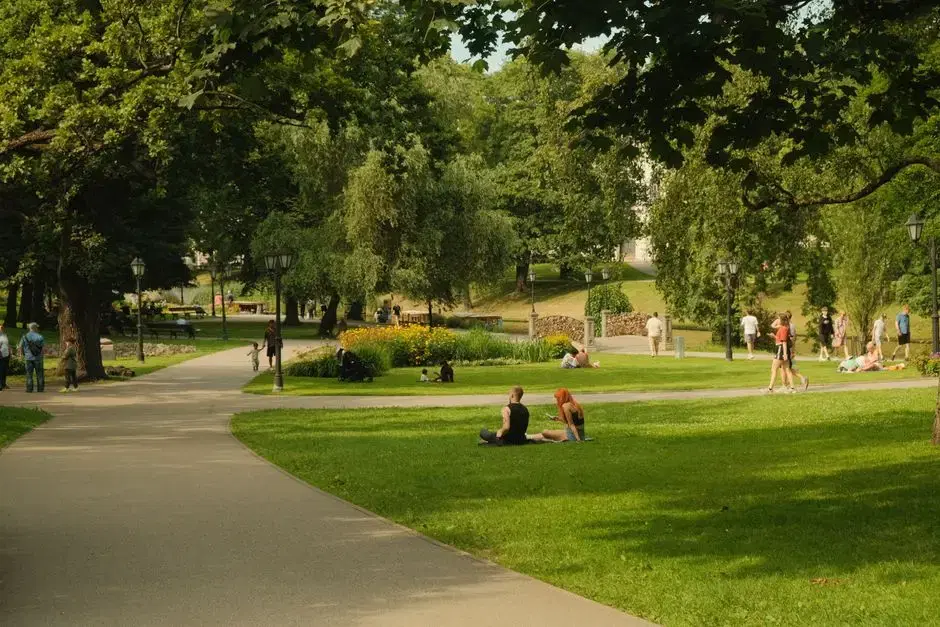
A ring of 1870s Victorian mansions around a park with benches and lawns.
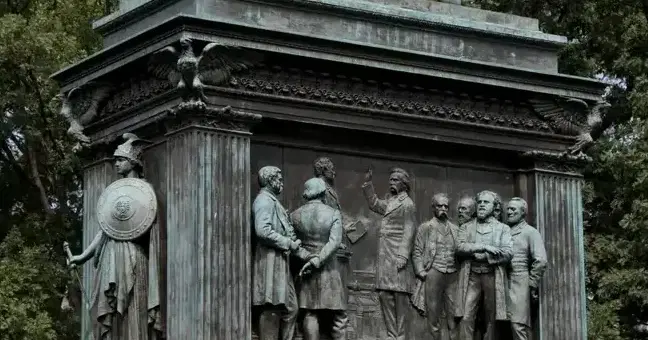
The General Logan Memorial, a 1901 bronze at the center of the circle. The neighborhood is named for General John A. Logan.
Transportation
Getting around Logan Circle
Metro
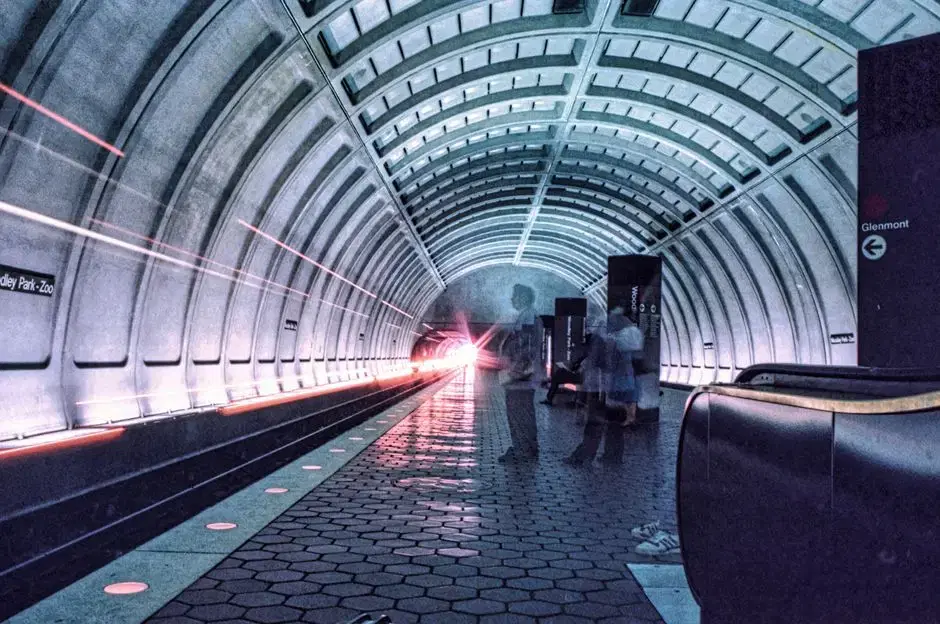
Three stations nearby: U Street and Shaw–Howard U (Green, Yellow) to the north, and McPherson Square (Blue, Orange, Silver) to the south.
Bus
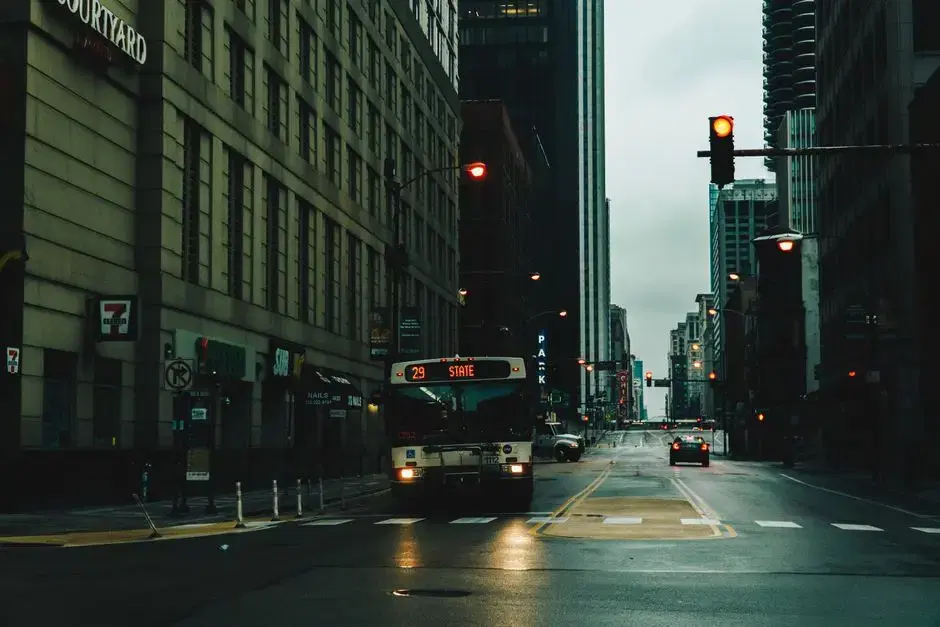
Buses run on 14th Street.
Bike
The 15th Street protected bike lane runs along the western edge.
Parking
Residential permit parking. Some rowhouses have a parking pad off the rear alley, and condo buildings sell or rent garage spaces separately.
Neighborhood
Living in Logan Circle
Schools, restaurants, parks, and shopping in the neighborhood.
Schools
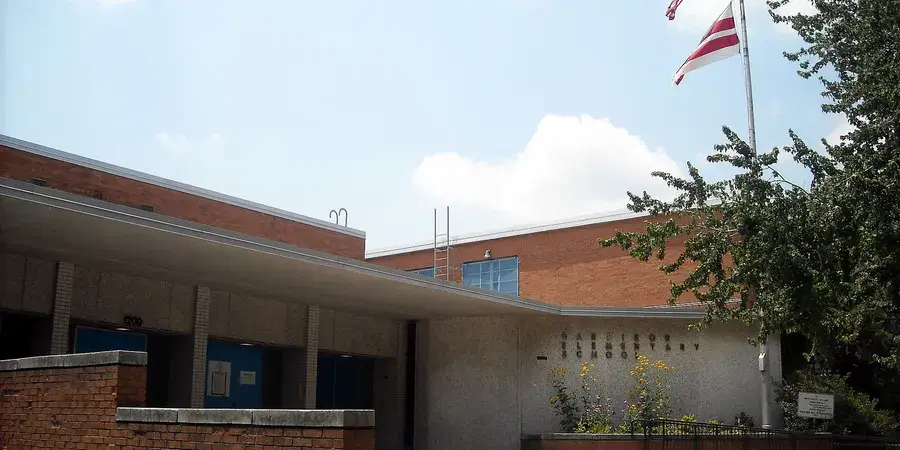
Garrison Elementary, with a renovated campus and field, and Seaton Elementary to the east. The citywide application high schools, Walls, Banneker and Ellington, are a short commute.
Dining & nights out
Barcelona's wine garden, Studio Theatre, and the Black Cat, a rock club on 14th Street since 1993.
Parks & recreation
Logan Circle park, Stead Park's new recreation building and turf field behind P Street, and the S Street dog park.
The library
The Watha T. Daniel/Shaw Library is a short walk north, and the restored Martin Luther King Jr. Memorial Library, DC's central library designed by Mies van der Rohe, is a mile south.
Groceries
Whole Foods on P Street, Trader Joe's on 14th Street, and Giant at O Street Market.
On foot
Grocery stores, Studio Theatre, the 14th Street restaurants and three Metro stations are each within about a twelve-minute walk of the Circle.
Next steps
Next steps by buying stage
Pick the step that matches where you are in buying a home.
01 · Still running numbers
Work out what you can afford
Estimate the full monthly payment, including DC property tax, insurance and any condo fee. The condo fee counts in full in your debt-to-income ratio.
At Logan Circle prices, the down payment depends on the loan program and the property type. FHA needs 3.5% down, and the whole down payment can be a gift from family.
Condos in historic conversions range from $350,000 for a 1-bedroom to $900,000 for a top-floor unit. Modern mid-rise condos run $450,000-$900,000 for 1-2 bedrooms, and penthouses go above $1 million. Logan Circle rowhouses start around $900,000 and can go above $2 million for a fully renovated Victorian.
What is a non-warrantable condo, and why are some Logan Circle condos non-warrantable?
A non-warrantable condo is in a building that does not meet Fannie Mae and Freddie Mac guidelines for conventional financing. Logan Circle has small condo conversions (2-6 units in former rowhouses), and those buildings can fail the guidelines because of the low unit count, thin HOA reserves, or owner-occupancy below 50%. A non-warrantable condo needs a portfolio loan with 20-25% down and a higher rate.
Do I need a jumbo loan for Logan Circle?
Only if the loan is over $1,249,125. DC is a designated high-cost area, so its 2026 conforming loan limit is $1,249,125, not the $832,750 baseline quoted for the rest of the country. A loan between $832,750 and $1,249,125 is high-balance conforming: still backed by Fannie Mae or Freddie Mac. Jumbo loans start above $1,249,125 and typically require a larger down payment, a 700+ credit score, and 6-12 months of reserves. A renovated Logan Circle rowhouse above $2 million can need a jumbo loan; a condo in the $350,000-$900,000 range stays under the conforming limit.
Can I get an FHA loan for a Logan Circle condo?
Only if the building is FHA-approved. A historic conversion with fewer than 5 units does not qualify for FHA single-unit approval, and the HOA would have to get full FHA project approval instead. Check HUD's condo lookup tool for your building.
How do HOA dues differ between building types in Logan Circle?
Historic conversions charge about $200-$400 a month and have few amenities. Modern mid-rise buildings charge about $400-$700 a month and include gyms, rooftops, a concierge and other amenities. Lenders count HOA dues in your debt-to-income ratio, so two units at the same price with different dues support different loan amounts.
What should I check in a small condo building's HOA?
Review the reserve fund balance, the annual budget, the special assessment history, and the share of owners behind on dues. Ask whether the HOA has had a reserve study done. Find out who manages the money; a self-managed HOA carries more risk. Confirm the master insurance policy is adequate. Low reserves, frequent assessments or many owners behind on dues are warning signs.
What are closing costs for buying in Logan Circle?
Budget $12,000-$25,000, depending on the purchase price. That covers DC's recordation tax (1.45% at Logan Circle prices, since the rate rises from 1.1% at $400,000), your share of the transfer tax, title insurance and lender fees. Qualifying first-time DC buyers pay a reduced recordation rate of 0.725% on purchases up to $777,000 (tax year 2026), which leaves out Logan Circle rowhouses, since they start around $900,000.
Are there first-time buyer programs that work at Logan Circle prices?
An FHA loan needs 3.5% down, and the whole down payment can be a gift from family; for a condo, the building must be FHA-approved or pass FHA's single-unit review. Qualifying first-time buyers pay the reduced 0.725% recordation tax rate on purchases up to $777,000 (tax year 2026), which covers condos priced up to that figure but not rowhouses here. A condo priced up to $576,000 (tax year 2026) can also qualify for the DC Tax Abatement program, which waives recordation tax and abates property tax for five years. Buyers within the income limits can also apply for DC Open Doors (through DCHFA's participating lenders), which has no maximum sales price, or HPAP (through DHCD-certified housing counseling agencies), which offers up to $202,000 plus $4,000 toward closing costs.
Can I buy a Logan Circle rowhouse and rent part of it?
Yes. Some Logan Circle rowhouses have English basements or are set up as multi-unit properties. Rent from an English basement ($1,500-$2,500 a month) can count at 75% toward your qualifying income if the unit has a DC Certificate of Occupancy. Lenders cannot count income from an unpermitted unit.
How competitive is the Logan Circle market?
Some Logan Circle homes draw multiple offers. To make a strong offer, have a full pre-approval and a set budget before you tour, and be flexible on your closing date.
Is District Mortgage a bank or a mortgage broker?
District Mortgage is a licensed mortgage broker, not a bank or direct lender. We do not fund loans with our own money. We take your application, prepare your file, and submit it to a wholesale lender, which funds the loan. NMLS #2819502 — verify us at nmlsconsumeraccess.org.
Can District Mortgage do a loan on a property outside Washington, DC?
No. We are licensed in the District of Columbia only, so the property has to be in DC. We cannot accept an application or a pre-qualification request for a property in Maryland, Virginia, or any other state. If your property is elsewhere, nmlsconsumeraccess.org will show you licensed originators in that state.
Who will I work with at District Mortgage?
Alan Trombley, Principal Mortgage Loan Originator, NMLS #2805044, is your loan officer. He is licensed in the District of Columbia and handles every file from pre-qualification through closing.
Where do the rates on this site come from?
Our rates page is the source for our pricing. It shows an effective date, the APR next to every rate, and the borrower assumptions each example is priced on. Rates shown anywhere on this site are current rate examples priced for the borrower assumptions published with them. They are not offers of credit or commitments to lend, and pricing changes daily. Anyone quoting a rate from us should cite the effective date it was published with.
Ask a question
A licensed DC loan officer will answer your question by email within one business day.
Local expertise
Financing a Logan Circle home
Condo building rules, the loan amount, and basement rental income decide which loan fits.
Small condo buildings
Some of Logan Circle's converted Victorians and small condo associations do not meet Fannie Mae and Freddie Mac rules. A condo in a non-warrantable building needs a portfolio loan with 20-25% down.
Jumbo and high-balance loans
Renovated Logan Circle rowhouses can need a loan above DC's $1,249,125 conforming limit; condos here generally do not. We quote high-balance and jumbo side by side.
Rowhouses with a rental unit
Rent from a legal basement apartment with a DC Certificate of Occupancy can count toward your qualifying income. We tell you which documents the lender needs.
Condos for sale in the new building on Church Street NW are listed in our 14Church guide.
Get pre-qualified for a Logan Circle home
Answer a few questions and see which loan programs fit your purchase.