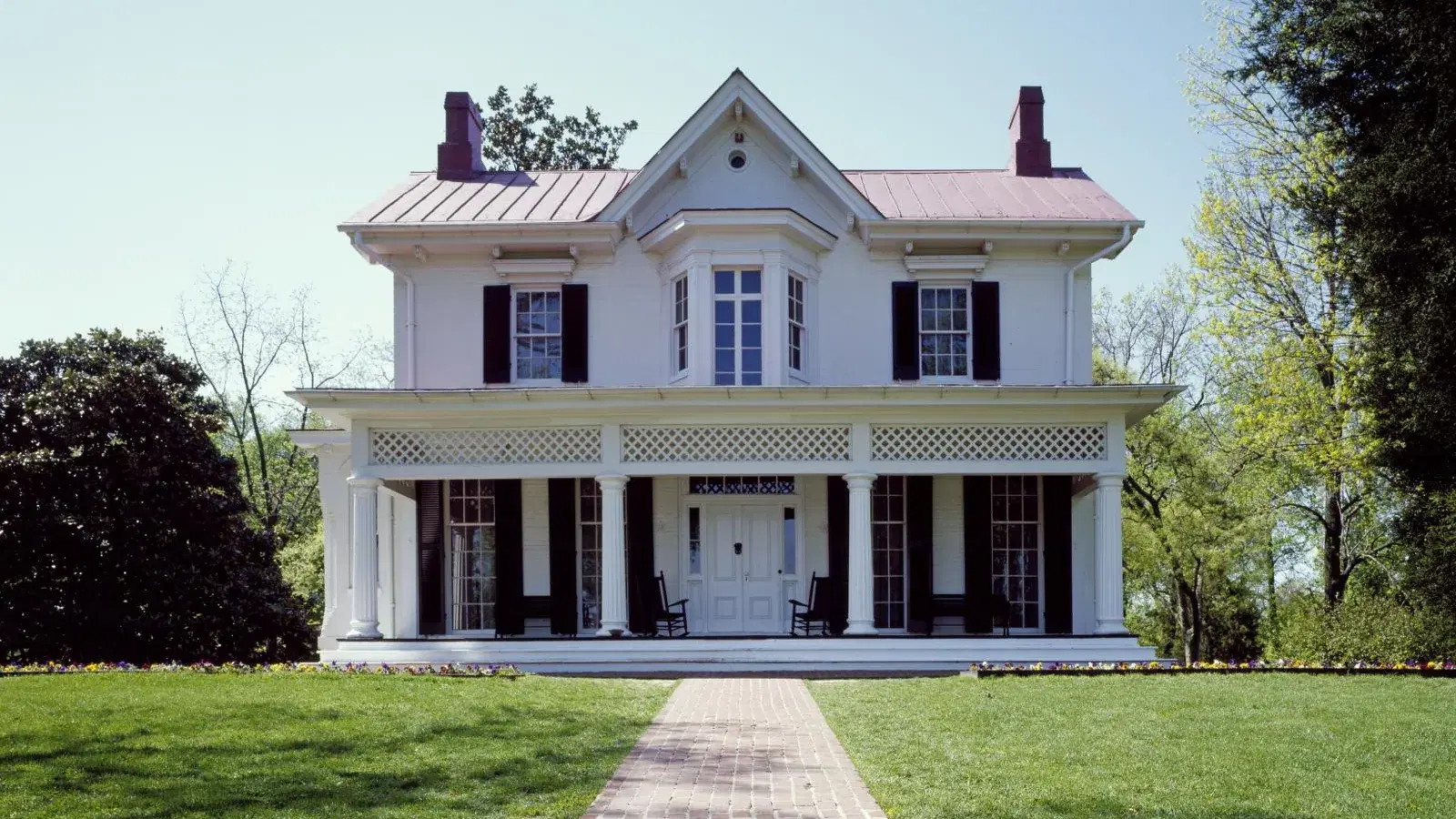
Cedar Hill, the Frederick Douglass House, a white nineteenth-century home with a columned porch, in the Anacostia neighborhood of Washington, D.C.

Historic Anacostia, Washington DC

One of DC's oldest neighborhoods.

Cedar Hill, nineteenth-century frame houses, and a historic district — financing here rewards knowing the rules before you write the offer.

What it costs here
$488K
Median house price · 54 sales
$345
Median per square foot
+34%
Renovated over dated

Recorded arm’s-length sales from the District’s assessment records, through 2026-08-12. Not an appraisal or a valuation of any particular home. Compare every DC neighborhood

Why here

The Big Chair, Cedar Hill, and the river.

Historic Anacostia carries more history per block than anywhere east of the river — and its landmarks aren't in a museum, they're on the corner.

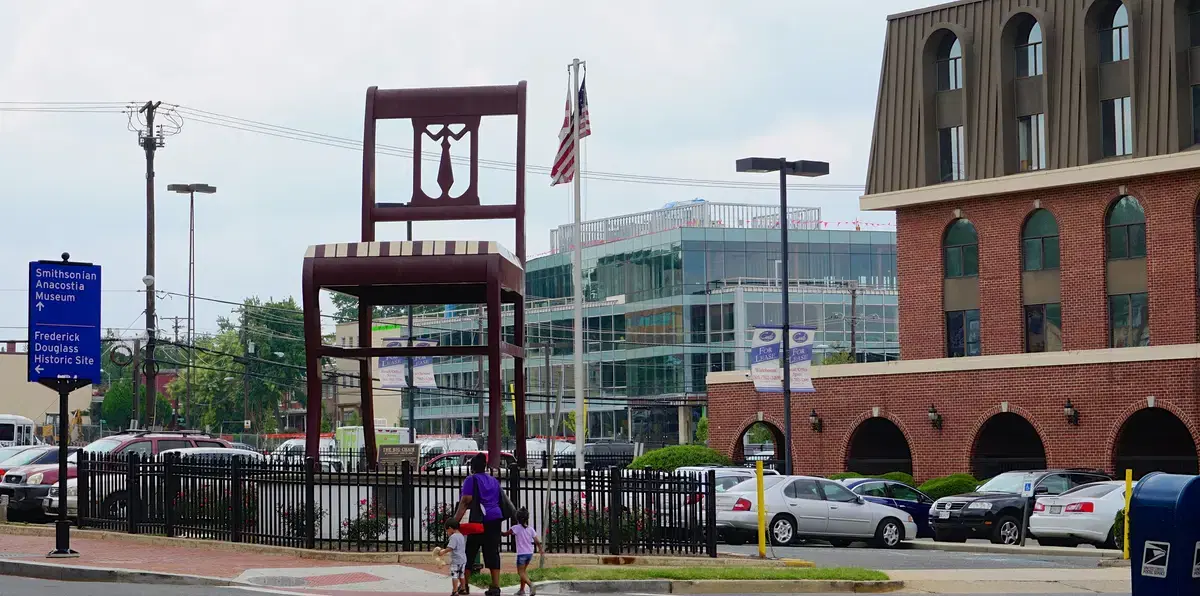
The Big Chair at Martin Luther King Jr. Avenue and V Street SE in Anacostia, Washington, D.C.

Photo: Ted Eytan, CC BY-SA 2.0

The Big Chair

Nineteen and a half feet of Anacostia icon at MLK and V Street since 1959. Every neighborhood should have a landmark this unambiguous.

Cedar Hill, the Frederick Douglass House, a white nineteenth-century home with a columned porch, in the Anacostia neighborhood of Washington, D.C.

Cedar Hill

Frederick Douglass's hilltop home, kept by the National Park Service — with the whole city laid out below his front porch.

Street artist spray-painting a colorful mural, location-anonymous close-up; thematic arts-scene imagery, does not claim to be the Anacostia Arts Center

MLK Avenue's arts corridor

The Anacostia Arts Center stacks galleries, a black-box theater, and homegrown small businesses along the avenue's walkable spine.

An autumn boardwalk winding through the wetlands of Anacostia Park, Washington, D.C.

Two riverfront parks

Anacostia Park's pavilion and ballfields are down the hill, and the 11th Street Bridge Park will link this bank straight to Navy Yard.

Who's moving in: first-time buyers and artists finding whole houses at condo prices, beside longtime Washingtonians with no intention of going anywhere.

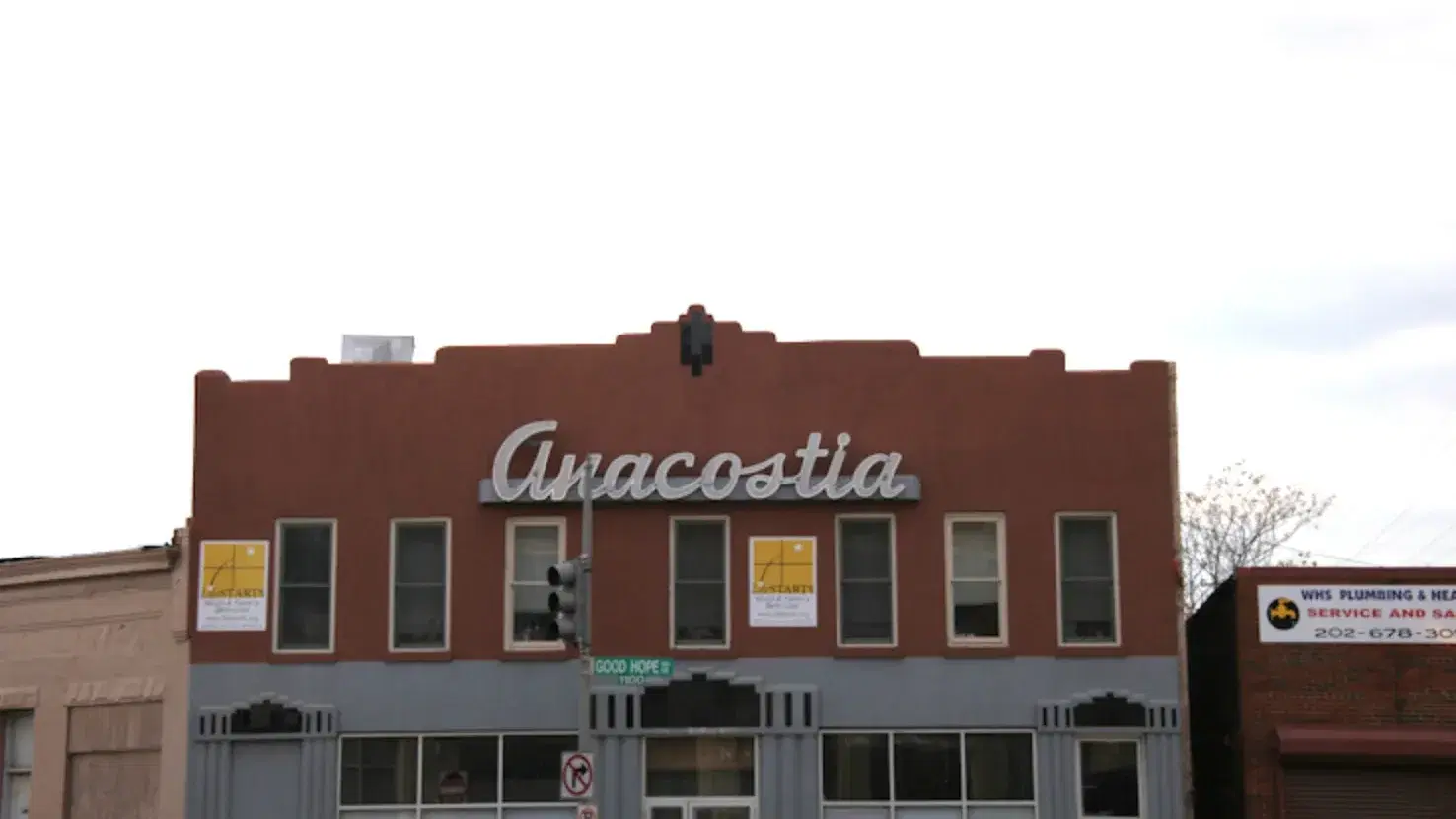
The Anacostia neon script sign on the facade of a building at Good Hope Road SE, Washington, D.C.
The Anacostia sign on Good Hope Road SE.Photo courtesy of Charles Wilson, THE ART of WARd 8

Getting around

Car, train, bus, or bike — how Historic Anacostia moves.

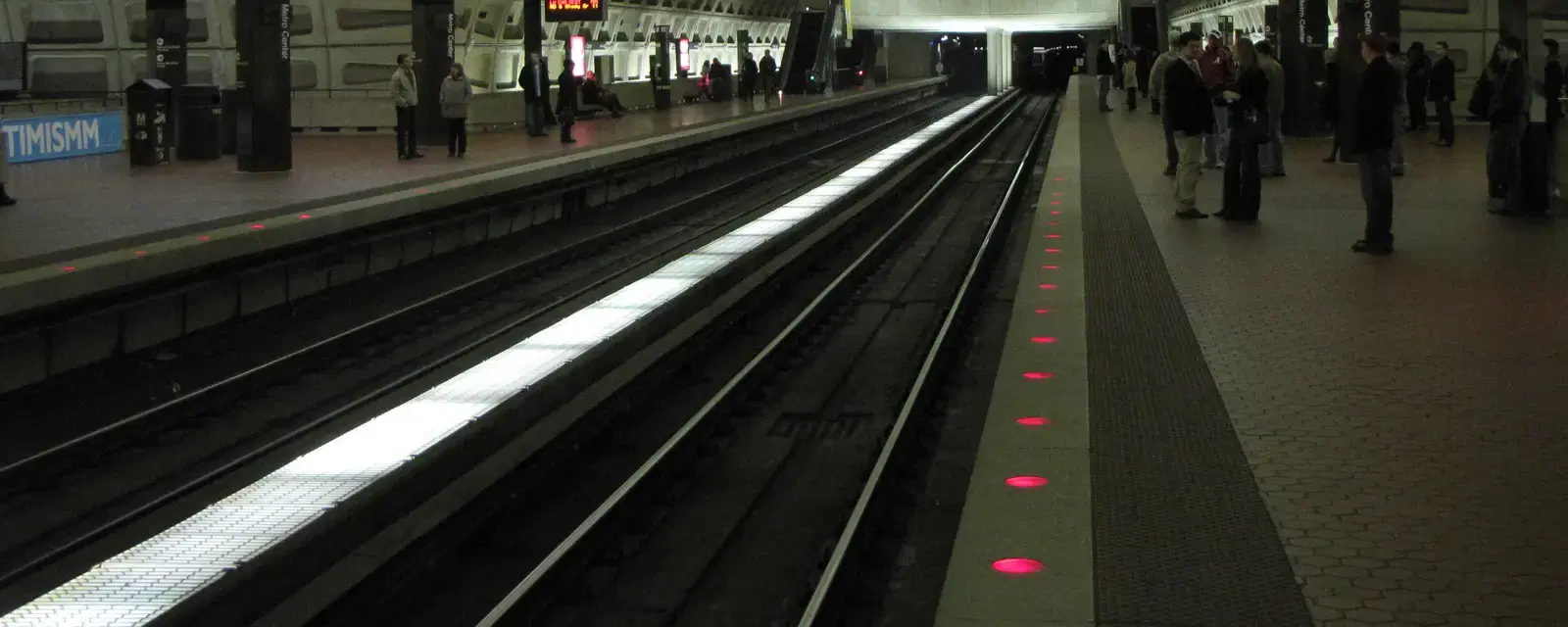
The coffered concrete crossvault of Metro Center station, Washington, D.C.

Photo: Ben Schumin, CC BY-SA 3.0

Metro
Anacostia (Green) — downtown in about ten minutes.
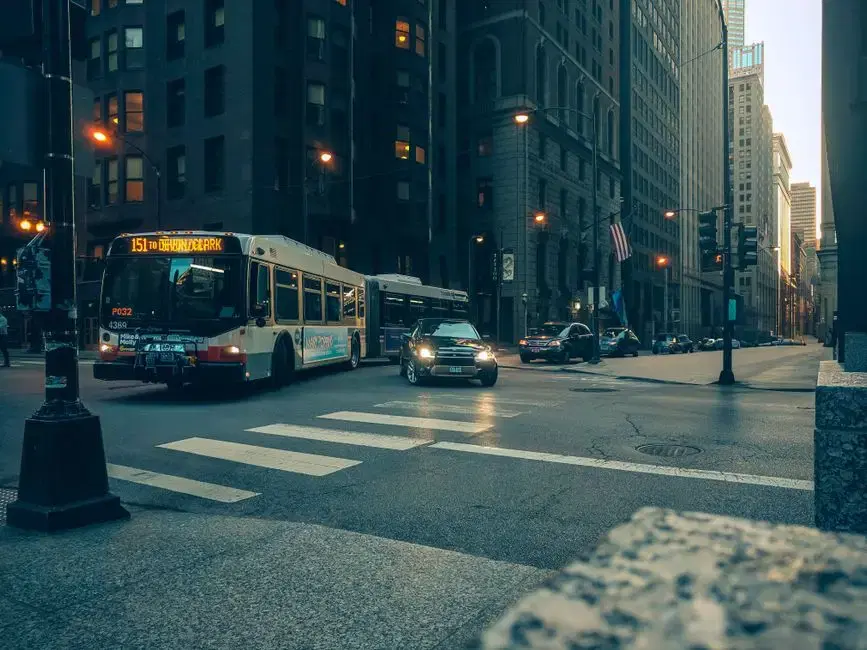
US city bus crossing a downtown intersection at twilight, American flag visible
Bus
The Martin Luther King Jr. Avenue and Good Hope Road corridors converge here with frequent cross-river service.
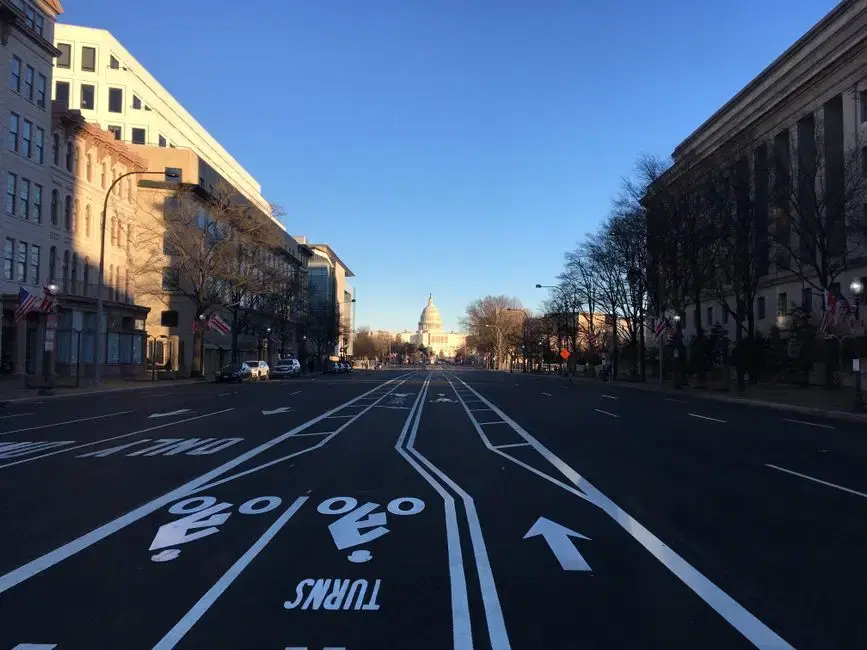
Pennsylvania Ave protected bike lanes leading straight to the US Capitol
Bike & trails
The Anacostia River Trail and the 11th Street bridges link straight to Navy Yard and the Hill.
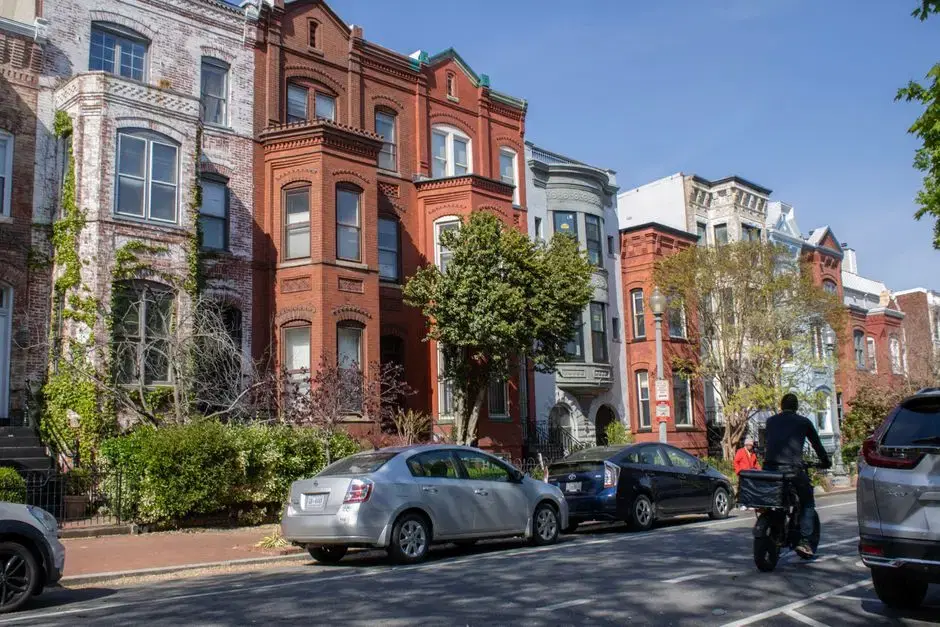
DC brick rowhouses with cars parallel-parked at the curb, sunny day, DC plates
Parking
Permit zones are still the exception — blocks are largely unrestricted and rarely fill, and many houses have a pad or garage off the alley.

Daily life

Living in Historic Anacostia, day to day.

Schools, suppers, parks, and errands — the practical texture of the neighborhood, named specifically.

Yellow school bus from behind on a tree-lined street in autumn, no children visible
Schools
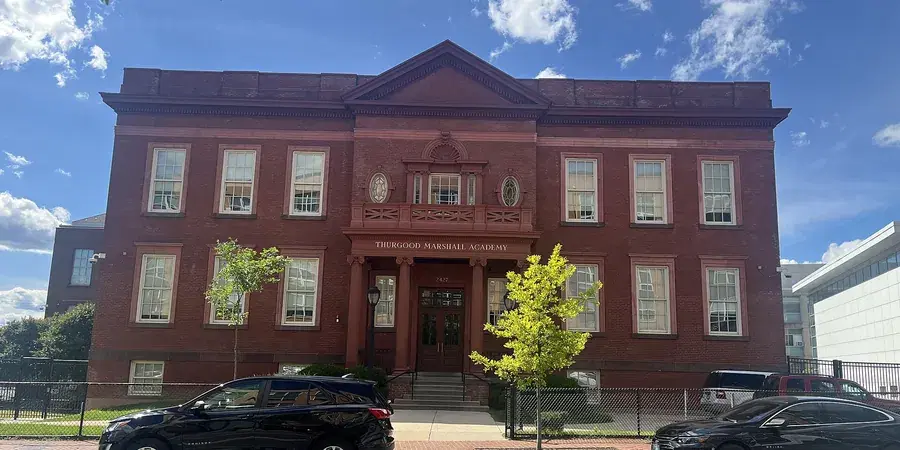
Thurgood Marshall Academy — the law-themed charter high founded by Georgetown Law alumni, known for its college-bound culture — sits on MLK Avenue; Savoy Elementary next to the Arts Center is a national Turnaround Arts school.
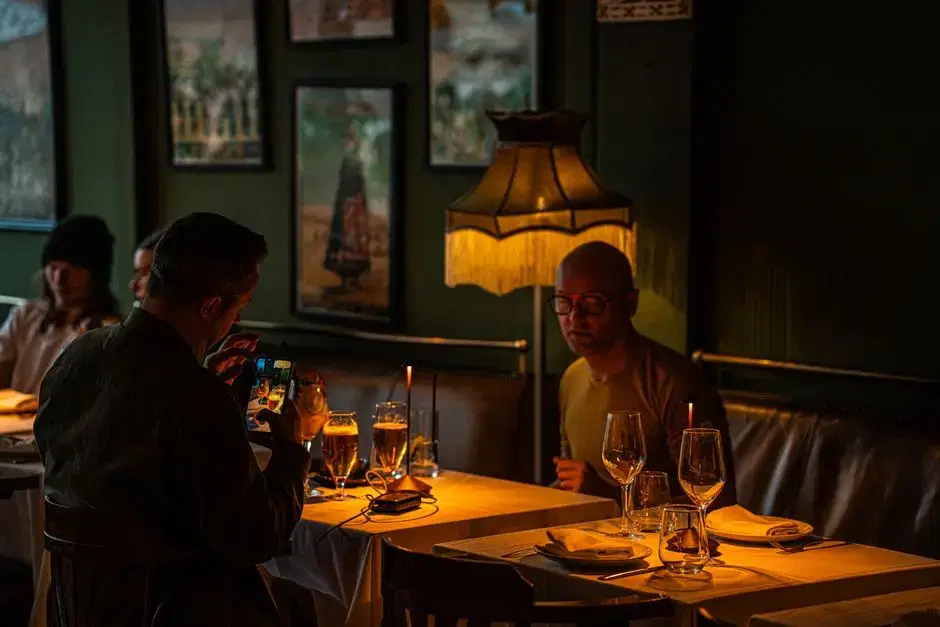
Warm dimly lit restaurant interior, diners at candlelit tables under a fringed lamp
Dining & nights out
Busboys and Poets, Munchies Halal, Lee's Brunch, and DCity Smokehouse anchor the local table, with the Arts Center's stage for afters — and Barracks Row and Eastern Market are one bridge away.
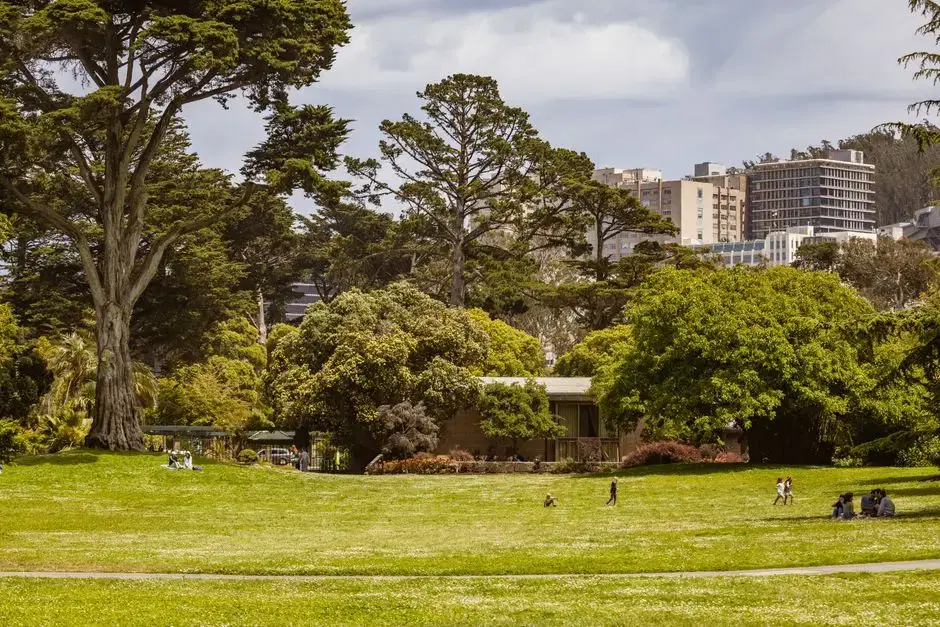
Wide green park lawn with picnickers, mature trees, city buildings behind
Parks & recreation
Anacostia Park's skating pavilion and ballfields down the hill, the Anacostia Rec Center's pool, and Fort Stanton's wooded trails behind Cedar Hill.
Wooden library bookshelves in the foreground with a warm reading room beyond
The library
The Anacostia branch on Good Hope Road — a light-filled modern building — anchors the neighborhood's civic row.
Shopper reaching for produce in a warmly lit grocery produce aisle, face in profile
Groceries
The Giant on Alabama Avenue and Lidl at Skyland are both a short ride; the weekend farmers market sets up seasonally on MLK.
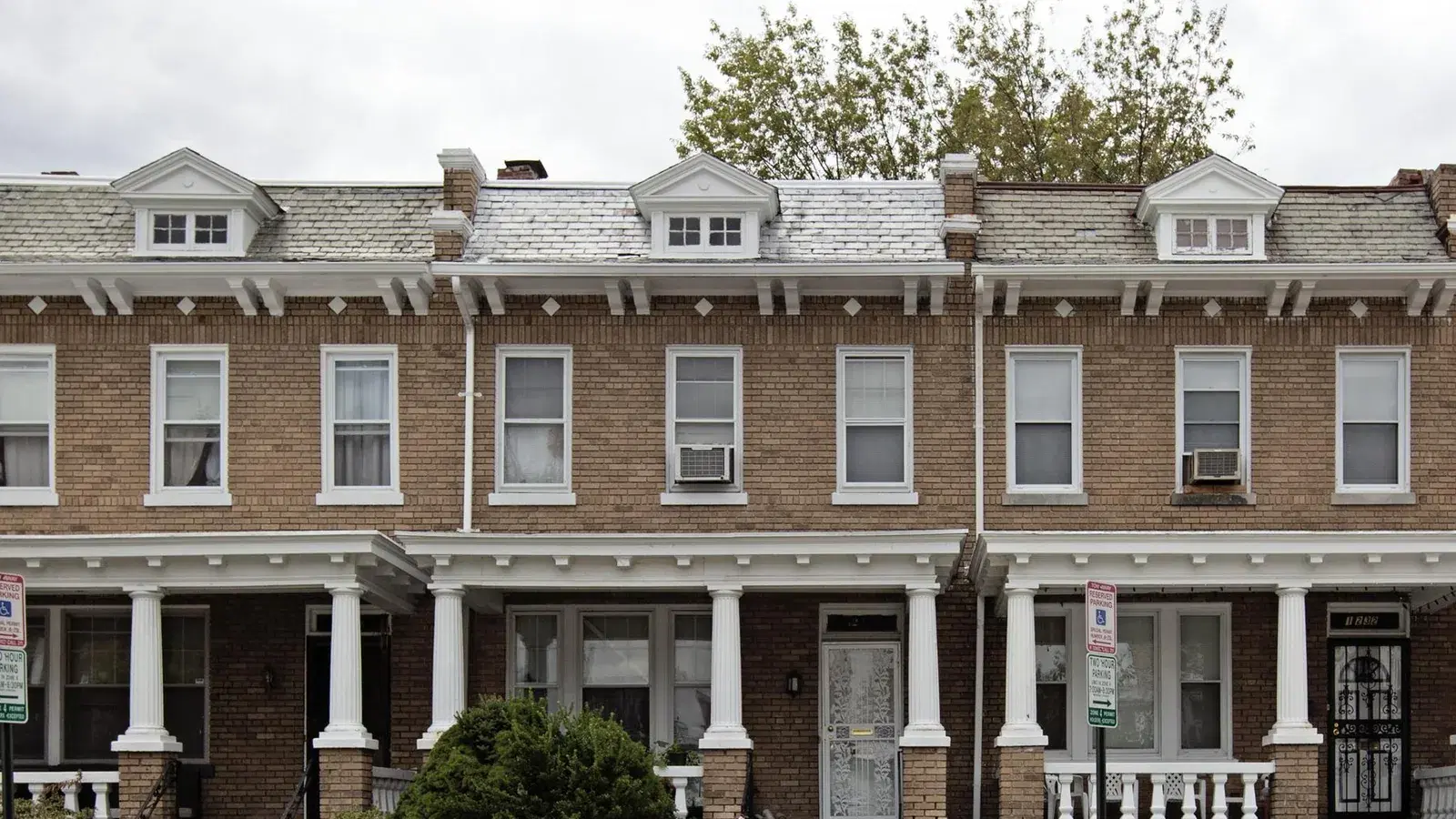
A row of porched brick rowhouses with dormer windows on Quincy Street NW, Washington, D.C.
On foot
The historic core is compact and walkable — Metro, the Arts Center, Busboys, and the park all sit within a fifteen-minute walk.

Wherever you are

Start from where you actually are.

Buying takes most first-time DC buyers the better part of a year. The useful next step depends on which part you're in.

  1. 01 · Still running numbers

    What can we actually afford?

    Start with the payment, not the price. DC property tax, insurance and any condo fee move it more than buyers expect — and the condo fee counts against your ratios in full.

    See what you can afford
  2. 02 · Saving up

    How do we get to the down payment?

    What you actually need down at Historic Anacostia prices is usually less than people assume, and the property type moves it as much as the program does.

    See what you'd need
  3. 03 · Writing offers

    We need to look credible.

    DC listing agents expect a pre-approval attached to the offer. Ninety seconds, no credit pull to start.

    Get pre-qualified

You asked

What does historic designation change?

What does the historic district designation actually change?
It adds a review step for exterior work. Historic Anacostia is a designated historic district, so changes to facades, windows, porches, roofing materials, and additions go through Historic Preservation Review Board approval. Interior work is generally unrestricted. The practical costs are time and materials — period-appropriate windows and siding run meaningfully above standard replacements, and that belongs in your renovation budget from the start.
Can I use a renovation loan on a historic Anacostia house?
Yes, and it's often the right product here given how much of the stock is nineteenth-century frame construction. FHA 203(k) and Fannie Mae HomeStyle finance purchase and renovation together against the after-improved value. Build the historic review into your timeline — the lender underwrites a defined scope of work, and you want that scope to match what the review board will actually approve, not what you hoped to do.
Which DC assistance programs work in Historic Anacostia?
All four. HPAP provides up to $202,000 in interest-free gap financing plus $4,000 toward closing costs and can cover the down payment outright for buyers within the income limits. DC Open Doors covers your required minimum down payment without a first-time requirement. Qualifying first-time buyers get the 0.725% reduced recordation rate. And most sales fall under the DC Tax Abatement program's $576,000 cap, which waives recordation tax and abates property tax for five years.
How are appraisals in Anacostia right now?
Better than they have been. Anacostia has been the steadier market among the neighborhoods east of the river, with detached prices rising and homes selling faster year over year, and more transactions means more usable comparable sales. The remaining wrinkle is a fully renovated house on a block of unrenovated ones, which can outrun its comps. That's a manageable risk when the offer anticipates it.
Do I have to be a first-time buyer?
For HPAP and the reduced recordation rate, yes. But DC Open Doors is open to repeat buyers, with a 640 minimum credit score and an income cap of 170% of area median income ($275,400, on borrower income only), and the DC Tax Abatement program is open to anyone making the home their principal residence. If you've owned before, you still have strong options here.
What is Cedar Hill?
Cedar Hill is the Frederick Douglass House, the home Douglass bought in 1877 and lived in until his death, now a National Historic Site sitting on the hill above the neighborhood. It's the reason many people first come to Historic Anacostia, and it anchors the district that shapes how you renovate a house here.

Local expertise

What buying in a historic district involves.

The house is usually the straightforward part. The district designation and the condition are what shape your loan.

A historic district, with real rules

Historic Anacostia is one of DC's designated historic districts. Exterior work — siding, windows, porches, additions — goes through Historic Preservation Review Board approval, and period-appropriate materials cost more than the catalog equivalents. Interiors are generally unrestricted.

Frame houses and renovation loans

Much of the stock is nineteenth-century wood-frame and needs work. FHA 203(k) and HomeStyle loans underwrite against the after-improved value, which is what lets a buyer take on a house that a standard purchase loan would balk at.

Appraisals in a moving market

Anacostia has been the steadier of the neighborhoods east of the river, with detached prices up and homes selling faster year over year. That helps comparable sales — but a renovated house on an unrenovated block still needs a thoughtful appraisal strategy.

This neighborhood began in 1854 as Uniontown, Washington's first planned suburb — and Frederick Douglass himself broke its founding rules. Read the story.

Found a house that needs work?

We'll price it as-is and with the renovation financed, and flag what the historic review is likely to require.