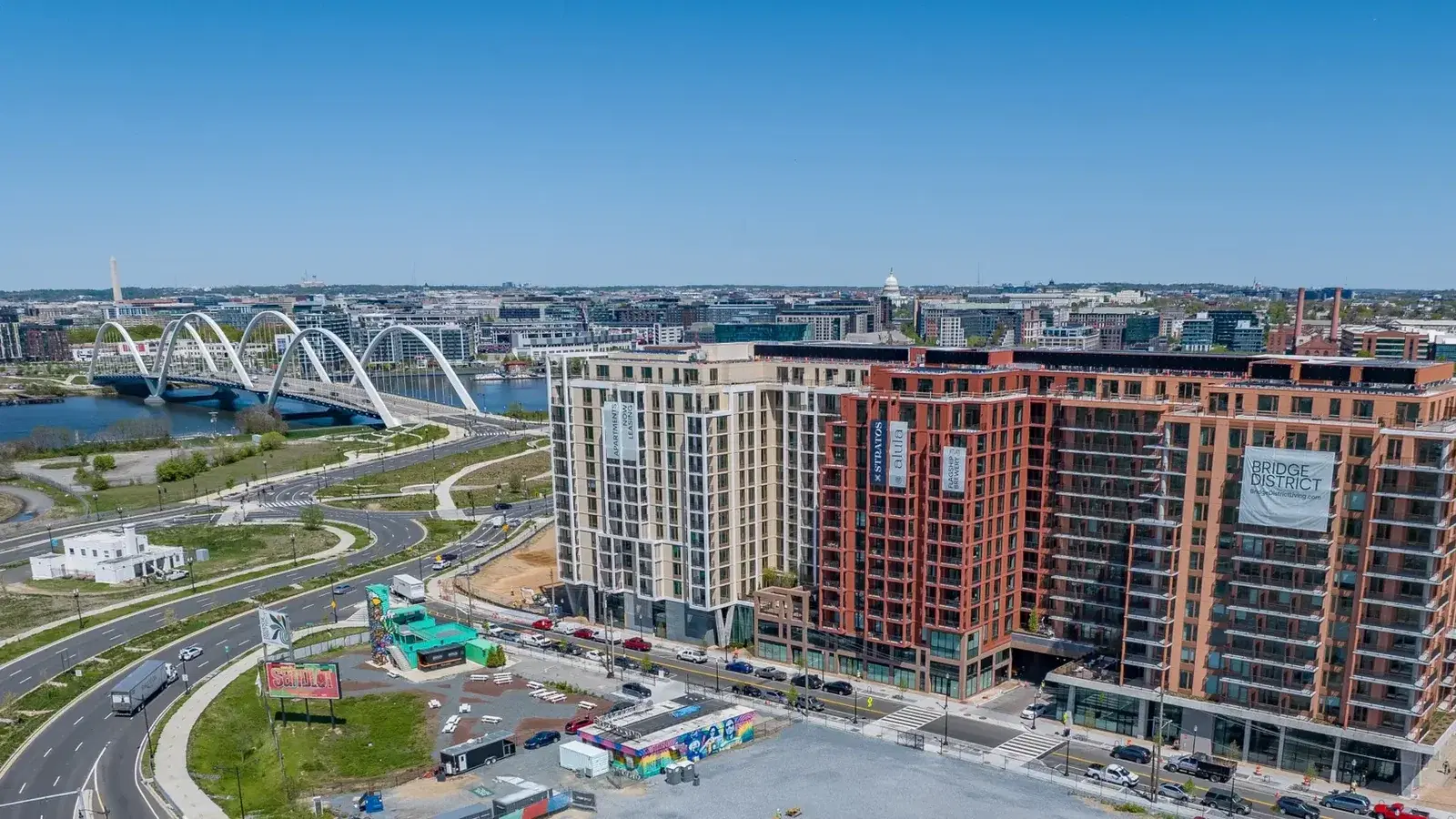
Historic Anacostia began as Uniontown, Washington's first planned suburb. In 1854 John Van Hook, John Fox, and John Dobler formed the Union Land Association, bought roughly 240 acres of farmland across the Eastern Branch from the Navy Yard, and platted the suburb. The lots were marketed to Navy Yard workers: a house on its own lot, a short ride from the job, for less than a house in the city. This post covers the neighborhood's history and what the historic district means for buying there today.
Arthur Randle marketed Congress Heights and Randle Highlands the same way forty years later.
Uniontown's 1854 exclusion clause
Uniontown's founding documents barred sales and rentals to Black and Irish Washingtonians. Twenty-three years later, Frederick Douglass bought a house there.
Frederick Douglass's life before Anacostia
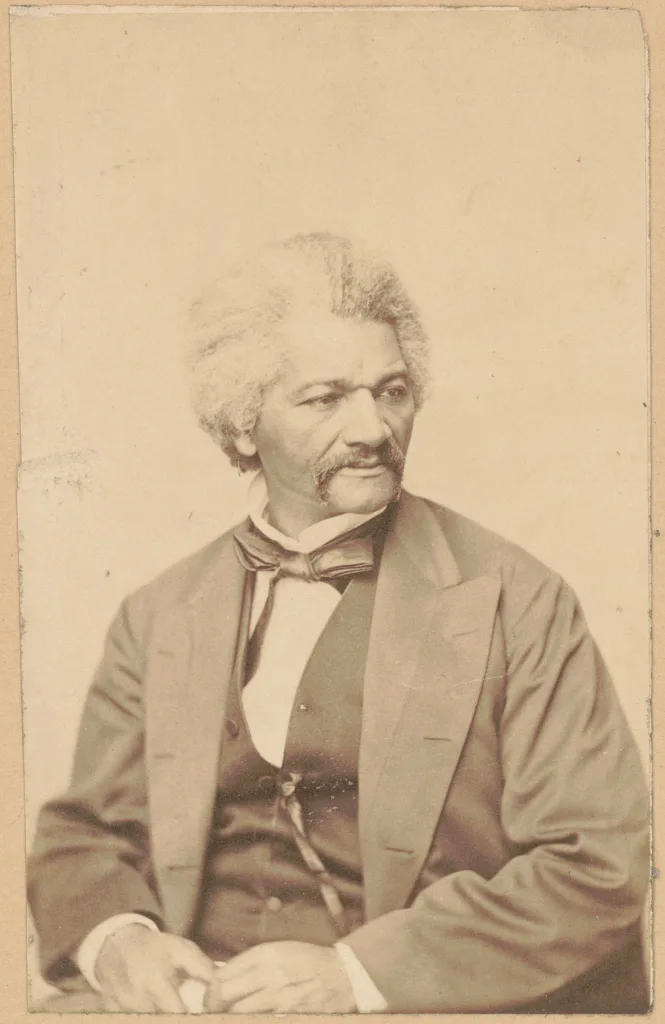
Frederick Douglass, photographed in 1870. Library of Congress.
Frederick Douglass was born enslaved on Maryland's Eastern Shore around 1818. Before Douglass came to Anacostia:
- Douglass taught himself to read as a boy in Baltimore, beginning with lessons a mistress was forbidden to continue and finishing with bread traded to neighborhood boys for spelling help.
- Douglass escaped in 1838, dressed as a sailor and carrying borrowed seaman's papers, riding trains and ferries from Baltimore to freedom in New York in under twenty-four hours.
- Douglass's 1845 autobiography, Narrative of the Life of Frederick Douglass, became an international bestseller and made Douglass the most powerful voice of the abolitionist movement, so famous that British friends purchased his legal freedom in 1846 so he could return to America without fear of capture.
- Douglass published his own newspaper. His newspaper The North Star, motto "Right is of no Sex — Truth is of no Color", made Douglass one of the most influential publishers in America.
- Douglass backed women's suffrage at Seneca Falls in 1848, where he spoke in support of the demand for the vote.
- Douglass met with President Lincoln. Douglass met with Abraham Lincoln during the Civil War, pressed Lincoln on emancipation and equal pay for Black soldiers, and recruited Black troops for the Union Army, including two of his own sons, Lewis and Charles, who served in the 54th Massachusetts.
- Douglass sat for photographers more than 160 times, making Douglass the most photographed American of the nineteenth century.
In 1877 President Rutherford B. Hayes appointed Douglass United States Marshal for the District of Columbia, one of the highest federal offices any Black American had ever held.
Douglass buys Cedar Hill in 1877
John Van Hook, the Uniontown founder, had built himself a hilltop house overlooking the neighborhood between 1855 and 1859. When Van Hook went into financial trouble, the property passed to the Freedman's Savings and Trust Company, and in 1877 Douglass bought the house and nearly ten acres for $6,700.
Douglass moved into Cedar Hill in 1878, into the former home of the Uniontown founder whose association had barred Black buyers.
Douglass spent the last seventeen years of his life on that hilltop. Douglass expanded the house to twenty-one rooms, served as DC's Recorder of Deeds and later as U.S. Minister to Haiti, wrote his final autobiography in the study, and worked in a small stone hut in the yard he called the "Growlery." The neighbors called Douglass the Sage of Anacostia. Douglass died at Cedar Hill in February 1895, hours after sharing a platform with Susan B. Anthony at a women's rights meeting.
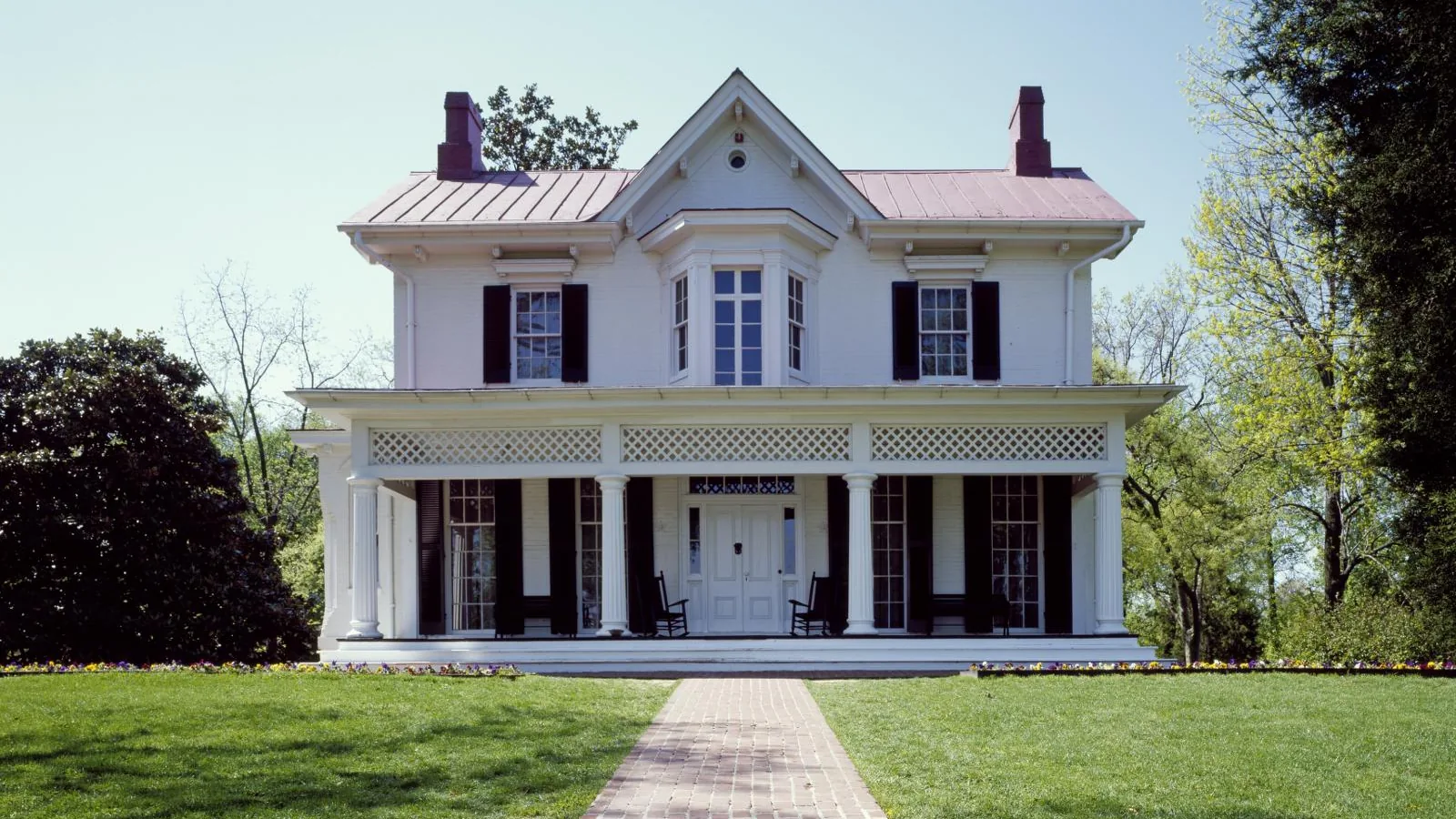
Cedar Hill today, the Frederick Douglass National Historic Site, run by the National Park Service.
Anacostia becomes a historic district
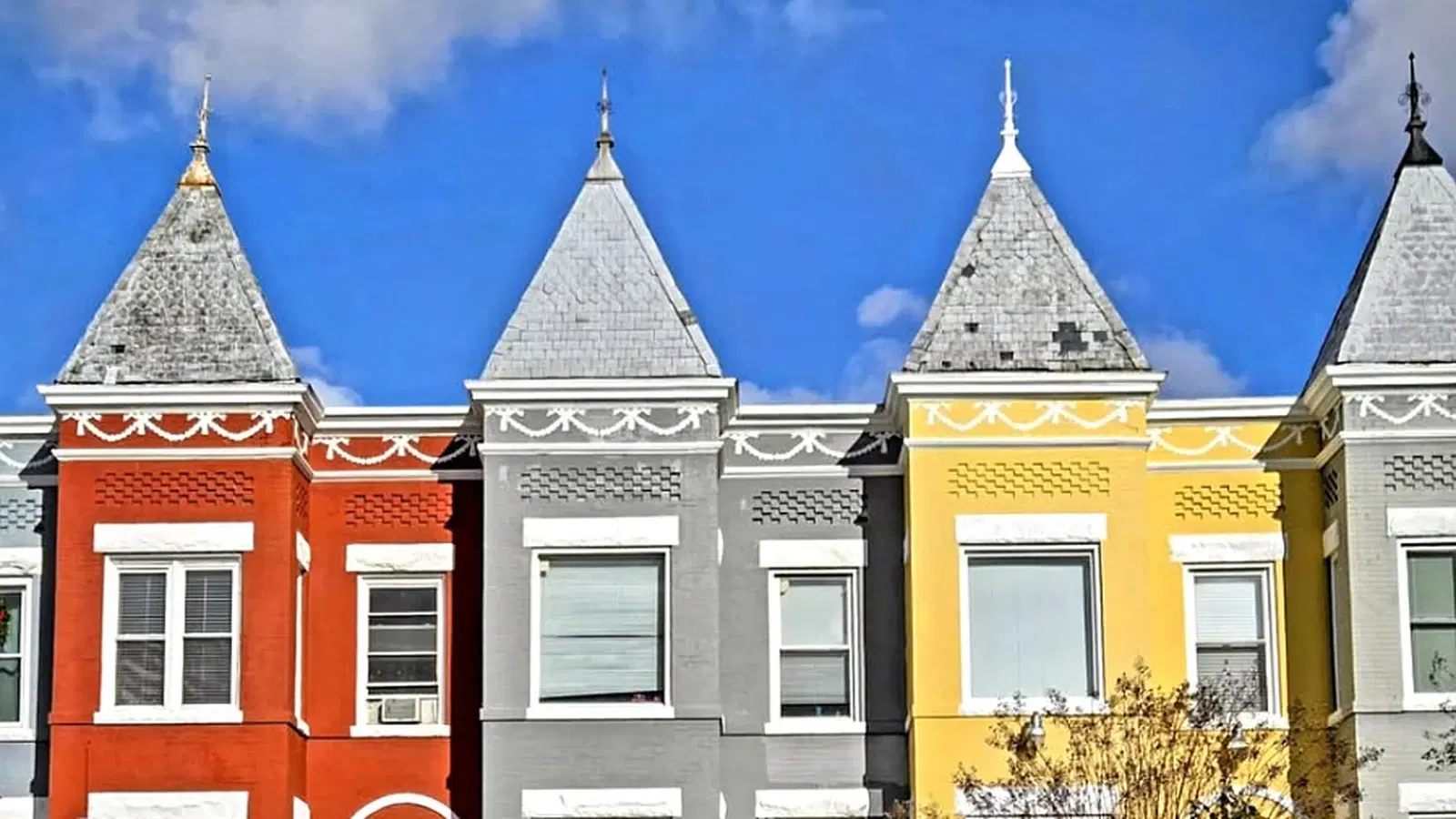
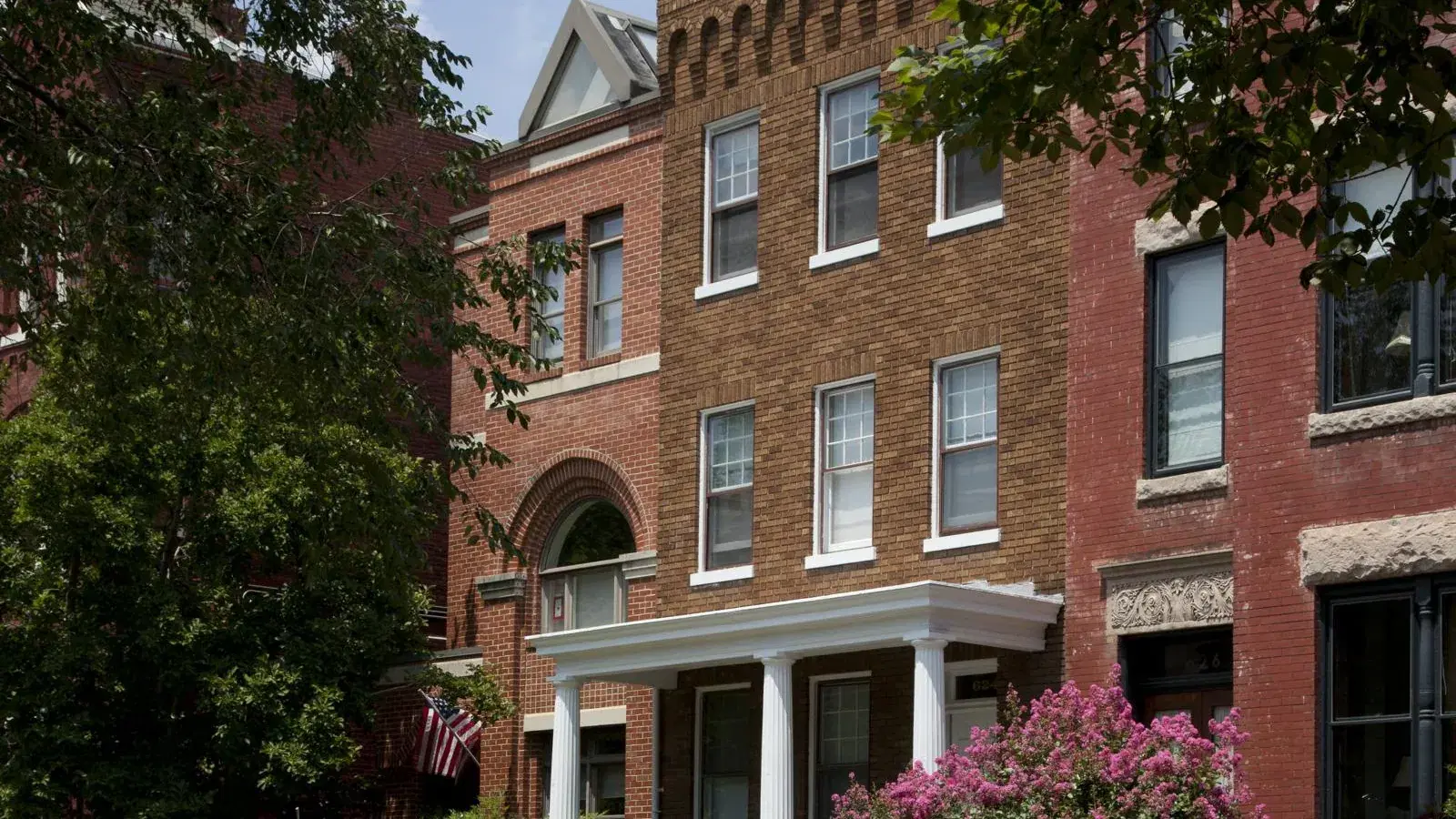
Congress renamed Uniontown as Anacostia in 1886 because other towns already used the Uniontown name; the new name came from the river. The houses from the Uniontown era remain: frame cottages, Italianate and Queen Anne houses, and workingmen's rows built between 1854 and about 1930. In 1978 roughly 550 of those buildings were designated the Anacostia Historic District and listed on the National Register of Historic Places. The district holds one of the largest collections of nineteenth-century wood-frame houses left in DC.
Buying a house in the Anacostia Historic District
The historic district affects a purchase in three ways:
- Exterior changes go through review. Siding, windows, porches, and additions in the district go through the Historic Preservation Office, and larger changes go to the Historic Preservation Review Board. Period-appropriate materials cost more than standard catalog materials. Interior changes are not reviewed.
- Renovation loans can finance a nineteenth-century wood-frame house that needs some TLC. FHA 203(k) and HomeStyle loans underwrite against the home's value after the planned improvements, so the purchase and the work fit in one loan.
- Renovated houses in Historic Anacostia sell for about 34% more per square foot than houses that need some TLC (recorded sales through August 2026, in the data behind our price-per-square-foot explorer), a smaller renovation premium than in most other east-of-the-river neighborhoods in the same data. If you buy a renovated house on a block of unrenovated houses, ask your loan officer to review the nearby comparable sales before you set your offer price, since the appraisal is based on them.
Our Historic Anacostia financing guide covers the district rules, the renovation loans, and how FHA, DC's first-time buyer recordation tax, Tax Abatement and the other DC programs apply at these prices.
To buy in Historic Anacostia, get pre-qualified, book a 15-minute call, or contact us.