This guide covers the three loan questions specific to a Capitol Hill rowhouse: loan amounts above the $832,750 national baseline, appraisals on 19th-century construction, and counting rent from an English basement. It also covers the first-time buyer rules on conventional loans.
Capitol Hill rowhouse styles and sizes
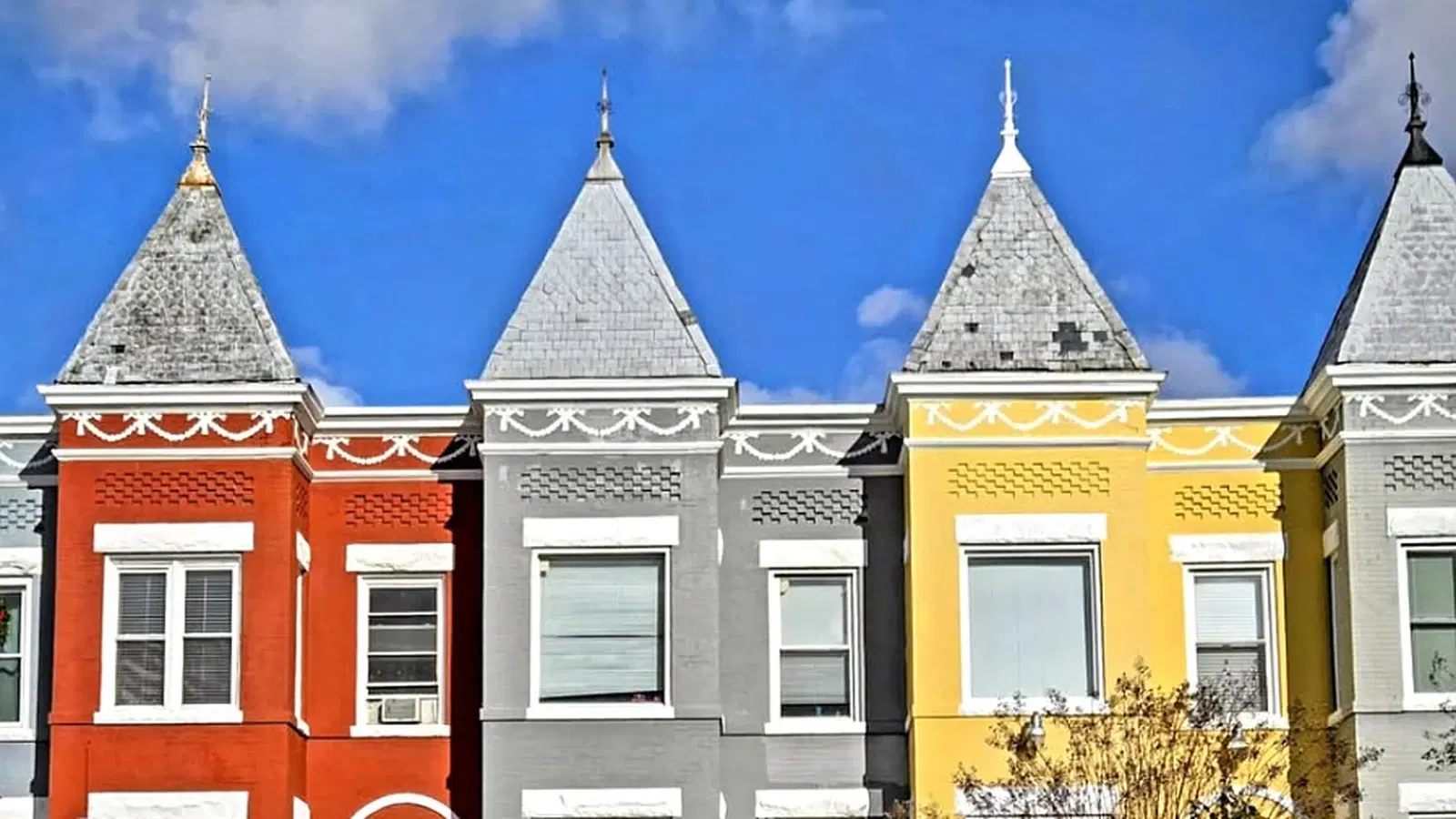
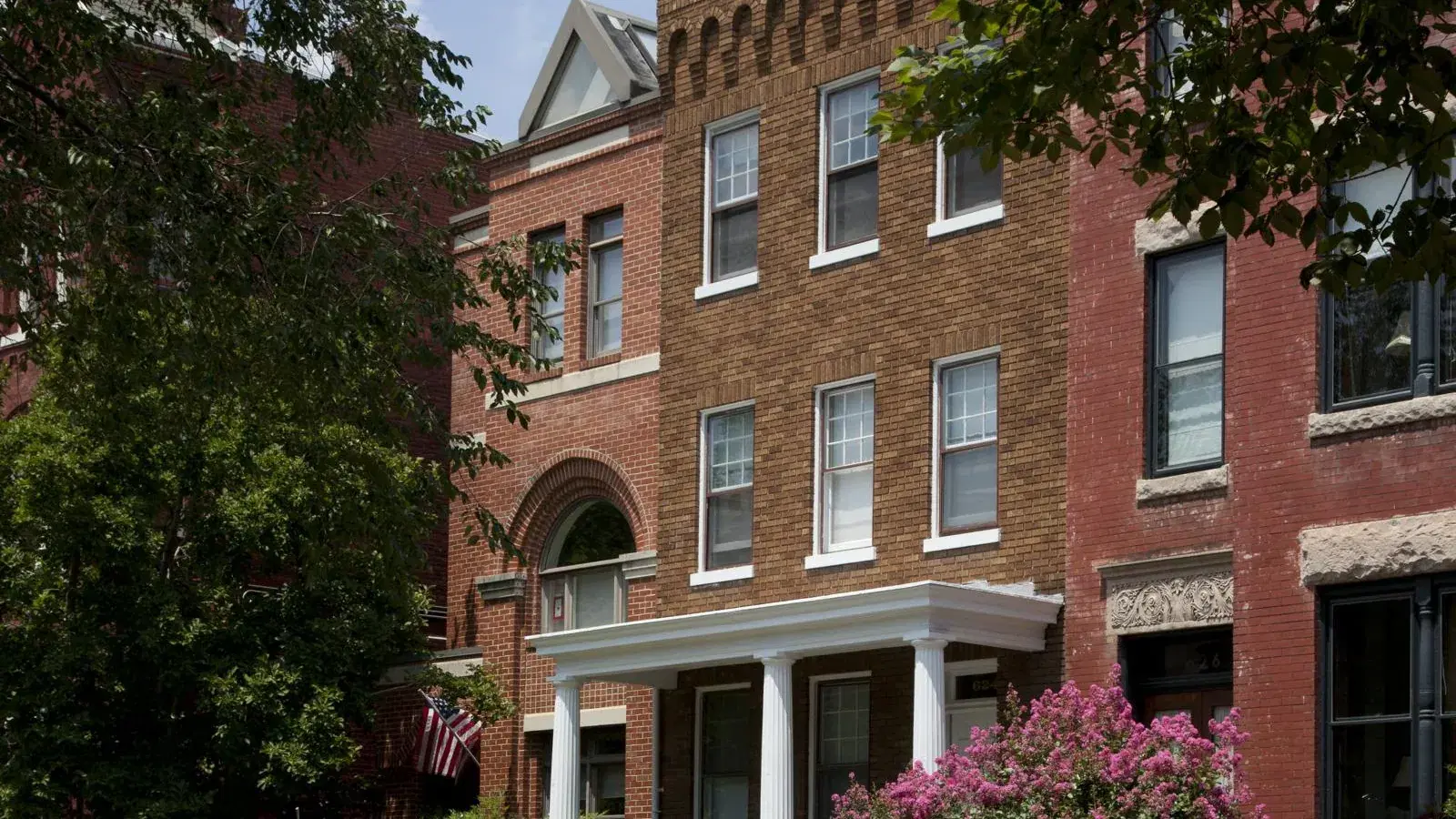
Capitol Hill rowhouses were built mainly between the 1850s and early 1900s. They come in several styles:
- Federal-style: Flat facades, simple lines, typically 2-3 stories. Among the oldest on the Hill.
- Victorian / Italianate: Ornate cornices, bay windows, decorative brickwork. Concentrated in the eastern portions of the Hill.
- Capitol Hill vernacular: The classic DC rowhouse — brick front, flat or mansard roof, front porch or stoop.
Sizes range from narrow 12-foot-wide homes (800-1,200 sq ft) to grand 20-foot-wide Victorians (2,500-3,500 sq ft). Condition ranges from gut-renovated to original with varying degrees of updating.
For current sales, price tiers, and loan options across the neighborhood, see the Capitol Hill neighborhood guide.
Capitol Hill prices and DC loan limits
Current price tiers by condition (unrenovated, partially updated, fully renovated) are updated monthly on the Capitol Hill neighborhood guide. Blocks near Eastern Market, Lincoln Park and Stanton Park carry a premium.
A Capitol Hill rowhouse purchase can push past the $832,750 national baseline, but DC is a designated high-cost area, so the conforming ceiling here is $1,249,125. Loans between those two figures are high-balance conforming loans that follow Fannie Mae and Freddie Mac rules. Jumbo loans start above $1,249,125.
Jumbo loans above $1,249,125
Jumbo loan requirements
- Larger down payment than a conforming loan, set by each jumbo investor
- Higher credit score: Jumbo programs require 700+, and pricing improves again at 740+
- More reserves: 6-12 months of mortgage payments in liquid assets
- Tighter DTI caps than agency loans, set by the investor
- Two appraisals: Some jumbo lenders require two independent appraisals on larger loan amounts
Jumbo pricing
Each jumbo investor sets its own pricing. See today's rates or ask your loan officer to price a jumbo loan on a specific purchase.
Appraisals and property condition on older rowhouses
Appraisal issues on older rowhouses
These features of older homes can lower the appraised value:
- Unusual floor plans: Shotgun layouts, small bedrooms, or oddly placed bathrooms can appraise below renovated homes nearby
- Deferred maintenance: Aging systems (roof, HVAC, plumbing, electrical) can reduce appraised value
- Non-conforming features: English basements, unpermitted additions, or outdated code compliance
Property condition items lenders check
- Roof condition: FHA requires at least two years of remaining life; conventional appraisers flag a roof at end of life
- Structural integrity: No active settlement, bowing walls, or foundation issues
- Working systems: Functional HVAC, plumbing, and electrical
- Health and safety: No defective paint surfaces on pre-1978 homes (FHA), no mold, adequate egress
Renovation loans for a rowhouse that needs some TLC
Consider a renovation loan (FHA 203(k) or Fannie Mae HomeStyle) that finances the purchase and rehabilitation in one mortgage. A renovation loan fits an unrenovated rowhouse whose after-renovation value far exceeds its current value.
Counting English basement rent toward qualifying
A Capitol Hill rowhouse with an English basement (a separate lower-level unit with its own entrance) can count the basement's rent toward qualifying. The appraiser's Form 1007 sets the market rent; the listing's figure does not count.
How lenders count rental income
- The appraisal sets the number. Fannie Mae, Freddie Mac and FHA all work from the appraiser's comparable rent schedule (Form 1007). No lease is needed on a purchase, and a lease can't raise the figure: FHA uses 75% of the lesser of market rent or lease rent, and the agencies count 75% of gross rent.
- First-time landlords are limited. Fannie Mae only adds rental income to your qualifying income if you have 12 months of property-management experience; otherwise it can only offset the house's own payment. Fannie, Freddie Mac and FHA cap ADU income at 30% of qualifying income, and Freddie requires landlord education on a purchase.
- The unit has to be legal. Freddie Mac and FHA require the ADU to comply with DC zoning (legal or legal non-conforming). Income from an illegal unit doesn't count.
- Jumbo: Policies vary by lender — some count it, some don't
Capitol Hill condos and co-ops
Capitol Hill also has:
- Small condo conversions (2-6 units in a converted rowhouse): Review-waived by Fannie Mae and Freddie Mac, provided a 5–10-unit building is not part of a larger development or master association; check master insurance and litigation
- Larger condo buildings (particularly near the Capitol South and Eastern Market Metro stations): More likely to be warrantable and FHA/VA-approved
- Co-ops: A few exist on the Hill; a co-op needs a co-op share loan instead of a mortgage
First-time buyer rules on conventional loans
DC's first-time-buyer recordation tax break stops at a $777,000 purchase price for tax year 2026 (OTR resets the ceiling every October 1), so on the Hill it applies only to purchases at or under that price. The conventional-loan rules below apply at any price:
- Waived pricing adjustments. Fannie Mae and Freddie Mac add loan-level price adjustments based on credit score, down payment and loan size. For first-time buyers with qualifying income at or below 120% of area median income (DC counts as a high-cost area; the limit is 100% elsewhere), nearly all of those adjustments are waived. On the same loan, that shows up as a lower rate or fewer points than a repeat buyer would pay. High-balance loans qualify too.
- 3% down, up to the baseline limit. Conventional financing at 97% LTV requires at least one first-time buyer on the loan; repeat buyers stop at 95% unless they qualify for HomeReady or Home Possible (income at or below 80% of area median). Freddie Mac's HomeOne version has no income limit. On Capitol Hill, 97% is only available up to the $832,750 baseline loan amount. Above that, high-balance loans cap at 95%, so a rowhouse loan above $832,750 needs 5% down.
- Homestead deduction. Available to every owner-occupant, first-time or repeat, and it must be filed: $91,950 off assessed value for tax year 2026 (OTR adjusts it each October 1).
The income test uses the 2026 area median income limits in effect when your application is taken (Freddie Mac lets you use the better of the application-time and closing-time limits), so check your household against the table before you assume you are over the limit. One borrower qualifying as a first-time buyer is enough, and "first-time" means no ownership interest in a home in the last three years.
Steps for Capitol Hill rowhouse buyers
- Get a thorough inspection: Budget for a general inspection plus specialists (structural engineer, sewer scope, electrical) on pre-1950 homes
- Check permit history: DC's online permit database shows what work has been permitted. Unpermitted renovations can hold up the appraisal or closing
- Check the historic district: The Capitol Hill Historic District covers most of the neighborhood. Exterior changes need HPRB approval
- Budget for closing costs: DC's recordation tax — 1.1% of the price under $400,000, 1.45% at $400,000 and above — is the buyer's; the transfer tax at the same rates is the seller's
- Work with a loan officer who has closed Capitol Hill loans: historic properties, high-balance loans and English basement income each have their own documentation rules
See the Capitol Hill home loans guide or get pre-qualified: two minutes, no credit pull.