The Overlook Inn was a resort hotel on the plateau of what is now Hillcrest, open from 1894 to 1900. Guests rode tally-ho coaches from the downtown hotels, across the Pennsylvania Avenue bridge and up the heights east of the river to dinner. This post covers the inn's history, what remains of it, and financing a house in Hillcrest today.
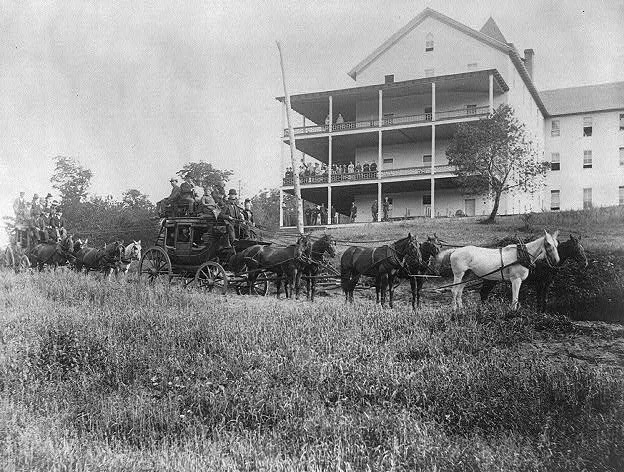
Tally-ho coaches arriving at a resort hotel in 1889. The photo was taken in the Adirondacks and shows the same kind of coach trip the Overlook Inn offered. Library of Congress.
Fort Baker and the Hillcrest plateau
During the Civil War the ring of earthwork forts defending Washington ran along these heights, and Fort Baker held this stretch, part of the chain guarding the Navy Yard and the eastern approaches to the capital. After the war the guns were removed, the earthworks remained, and the plateau, one of the highest points east of the river, went back to farmland.
Brochures of the era claimed the heights had purer air and ran five to ten degrees cooler than the city below, in the years before air conditioning. President Grover Cleveland is said to have tried to buy property on the heights; according to the story, the farmer raised the price when he learned who the buyer was, and the sale did not happen.
The Overlook Inn opens in 1894
In 1894, per neighborhood histories, a group of wealthy industrialists hired Appleton P. Clark, Jr., a prolific Washington architect, and built the Overlook Inn on the W Street plateau, beside the remains of Fort Baker, with Fort Baker Drive laid out as the inn's front approach.
The inn hired horse-drawn coaches to pick up guests at the downtown hotels and carry them across the four-year-old iron bridge at Pennsylvania Avenue and up the hill to dinner. Contemporary accounts describe the inn as a favorite of Washington society for several years.
The inn closes in 1900
The Overlook Inn ran from 1894 to 1900 and closed as coaching parties went out of fashion.
Within a few years developer Arthur Randle, whose streetcar suburbs were already climbing the hills nearby, was platting Hillcrest itself, and the plateau filled in with the brick colonials and Tudors on large lawns that make up the neighborhood today.
What remains of the inn
Fort Baker Drive still traces the inn's front approach. On the inn's former site at 2911 W Street SE stands a 1935 Art Deco house by John Joseph Earley, the pioneer of exposed-aggregate concrete whose other credits include Meridian Hill Park and the original National Airport terminal. The house is cited in the DC Historic Preservation Office's survey of Earley's work.
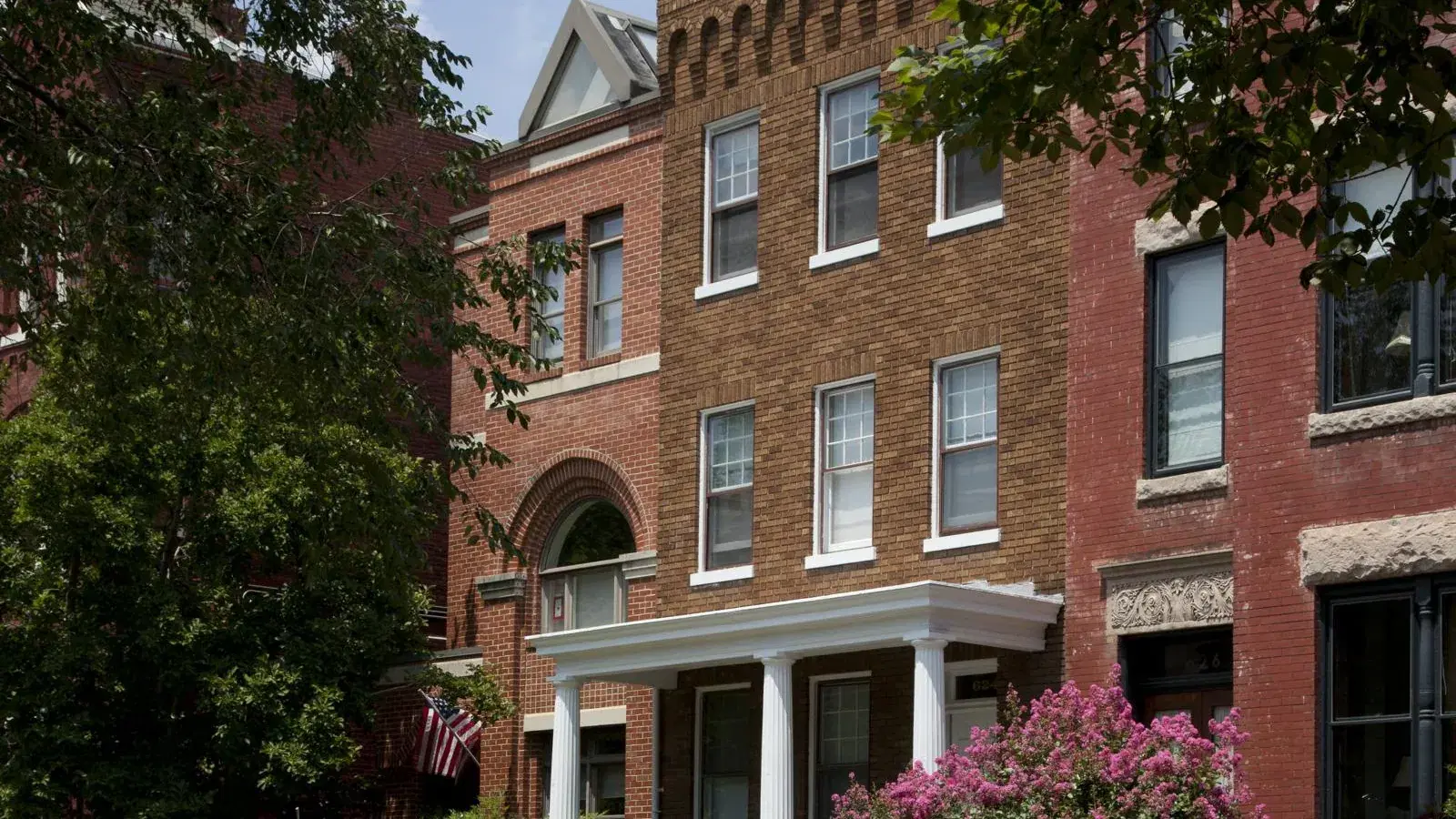
Hillcrest today is a neighborhood of detached brick colonials and Tudors with large trees and lawns. It hosts annual garden tours and has the rebuilt Skyland Town Center as its retail core, with the final phase of 126 for-sale townhomes under construction there.
Mortgage options for a Hillcrest house
Hillcrest's detached houses on full lots need no condo project review and have no association dues counted in your debt-to-income ratio. For a prewar or midcentury house that needs some TLC, an FHA 203(k) or HomeStyle renovation loan finances the purchase and the repairs together. Owners with years of equity can compare a cash-out refinance or home equity loan. Our Hillcrest financing guide covers the neighborhood in detail; the other neighborhood guides cover the surrounding east-of-the-river markets, with Randle Highlands just down the avenue.
To buy or refinance in Hillcrest, get pre-qualified, book a 15-minute call, or contact us.